KICHI ARCHITECTURAL DESIGN
Stylish Atriums|Key Points for Home Building|Strategies for Balancing Openness and Comfort
Author: Qurasuki Editorial Department
Atriums are a design approach that brings spatial richness and natural light even within limited site constraints. At the same time, they present practical challenges such as thermal insulation and heating and cooling efficiency. Addressing these challenges and considering usage tailored to the family’s lifestyle is essential. Careful deliberation during the planning phase enables the creation of spaces that harmonize comfort and efficiency.
Balance Between Appropriate Height and Floor Area.
The balance between the height of the atrium and the floor area significantly influences the spatial impression. If the ceiling is too high, the space may feel unsettled; if too low, the effect of the atrium diminishes. Generally, for two-story buildings, a height of approximately 5 to 6 meters is common. However, it is essential to determine the height while also considering maintenance and cleaning accessibility.
Optimization of Daylighting Design.
A major appeal of atriums is their ability to capture natural light from elevated positions. By effectively positioning clerestory windows, brightness can be distributed throughout the entire home. However, since solar heat gain in summer can also increase, it is advisable to plan for adjustments using features such as extended eaves or shading blinds.
Expansive Sightlines and a Sense of Openness.
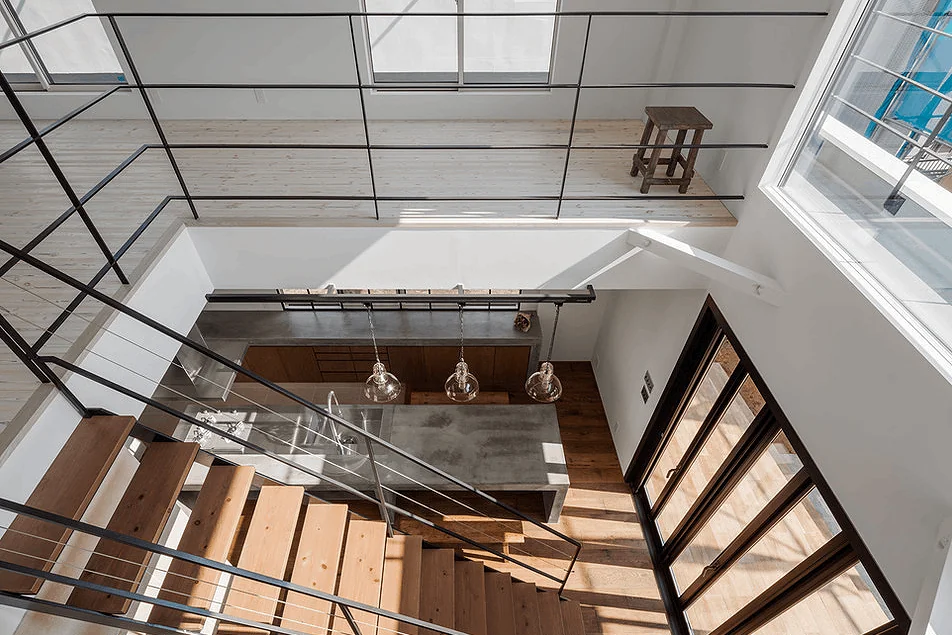
The atrium connects the first and second floors, creating a visual expansiveness. From the corridors and rooms on the second floor, one can see through the atrium to the first floor, and conversely, the presence of the upper floor can be sensed from the first floor, fostering a sense of family connection. However, it is also necessary to consider the balance with privacy.
Measures for Thermal Environment Control.
Atriums tend to allow warm air to rise easily, which can pose challenges for heating efficiency during winter. Comfort can be maintained by circulating air with ceiling fans, adopting underfloor heating systems, and implementing thorough high insulation measures. The introduction of whole-house air conditioning is also an effective option for homes with atriums.
Sound Resonance and Sound Insulation.
Due to the open atrium design, sound transmits easily, causing television audio and conversations from the first floor to resonate on the second floor. Rooms requiring quietness, such as bedrooms and studies, should be strategically located away from the atrium to mitigate noise transmission. Conversely, this design can be advantageous by allowing family members to sense each other's presence.
Lighting Design and Ease of Replacement.
Lighting fixtures positioned at high locations are challenging to replace and maintain; therefore, selecting long-life LED lighting or adopting spotlights is practical. Additionally, suspending pendant lights at extended lengths can serve as an accent within the space. The arrangement of lighting significantly influences the ambiance during both day and night.
Design of Handrails and Knee Walls.
In areas overlooking the atrium from the second floor, handrails and knee walls are required to ensure safety. Glass handrails provide unobstructed sightlines and create an open atmosphere, while wooden lattice handrails impart a warm ambiance. It is important to consider detailing that balances both design and safety.
Airflow and Ventilation Planning.
By creating a natural airflow utilizing atriums, the overall ventilation performance of the house is enhanced. Installing air inlets at the lower levels and exhaust outlets at the upper levels promotes natural ventilation driven by temperature differences. However, caution is necessary to prevent the intrusion of cold air during winter; therefore, incorporating operable mechanisms is advisable.
Relationship with the Staircase.
By designing the atrium and staircase as an integrated unit, the space becomes more striking. Positioning the staircase adjacent to the atrium allows occupants to experience a sense of spatial expansion when moving between floors. Utilizing a skeleton staircase further enhances visual permeability and increases the feeling of openness.
Relationship with Furniture Layout.
In spaces with atriums, furniture placement is also crucial. Increasing the window area can sometimes limit the locations available for furniture. By effectively utilizing built-in furniture to maximize wall surfaces or by anticipating furniture arrangement during the spatial planning phase, it is possible to achieve a balance between functionality and openness.
Consideration for Privacy.
The connection between the first and second floors through the atrium facilitates the transmission of sound and presence. While this can be positively regarded as fostering family communication, it is necessary to carefully arrange private rooms such as bedrooms to ensure privacy. It is important to consider a balance that aligns with the lifestyle.
Considerations on Cost Aspects.
Creating an atrium reduces the floor area on the second floor; however, since the surface area of walls and windows tends to increase, the impact on construction costs cannot be generalized. Additionally, it is necessary to consider the running costs of heating and cooling. Nevertheless, the sense of openness and the richness of the lighting environment gained are values that cannot be measured by cost alone. It is advisable to determine the scale and specifications of the atrium while balancing the budget.




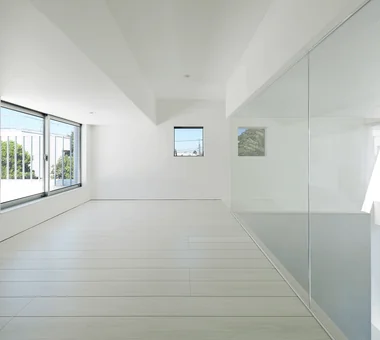 Stylish Lofts|Key Points for Home Building|Strategies for Maximizing Space on Limited Sites
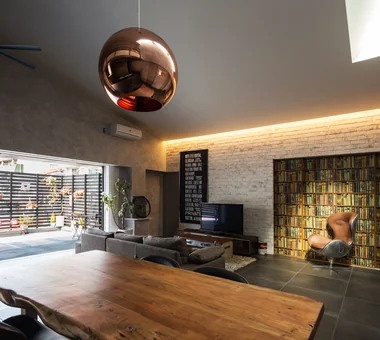 Homes for Design Enthusiasts|Custom-built homes by architecture firms|A Home Infused with Aesthetic Sensibility
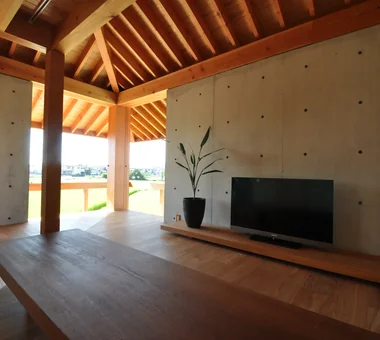 Concrete Houses|Key Points for Home Building|Design and Insulation Strategies Emphasizing Material Texture
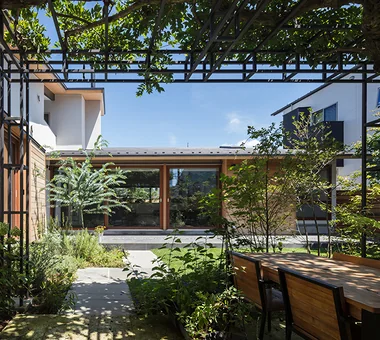 Homes with Gardens|Introduction to Architecture Firms|The Enrichment of Living with Greenery
 Homes for Antique Enthusiasts|Key Points for Home Building|Harmonizing Architecture and Interior Design through Materiality
 The Simple House|Introduction to Architecture Firms|The Richness Created by Negative Space