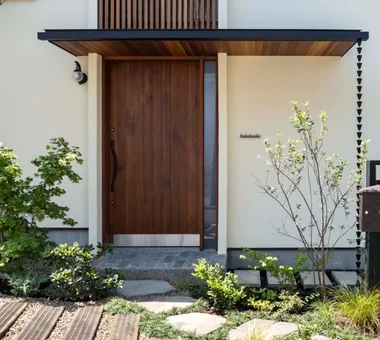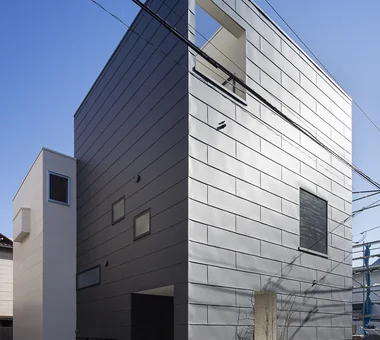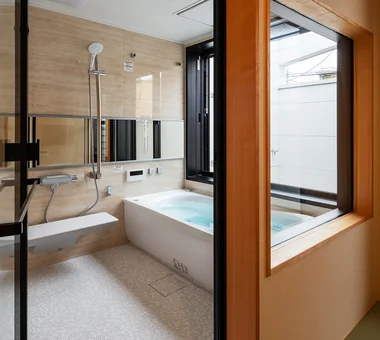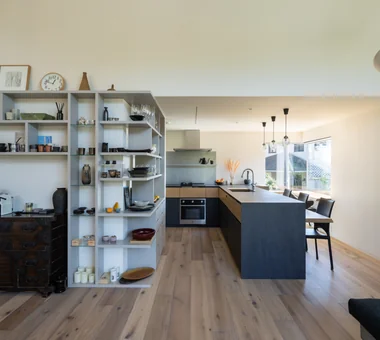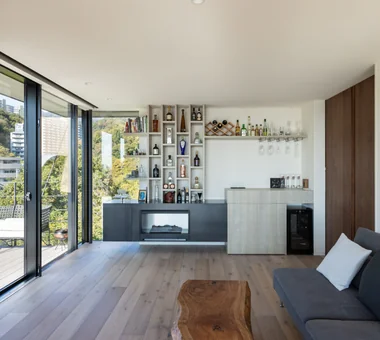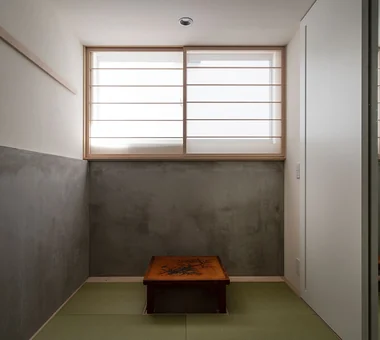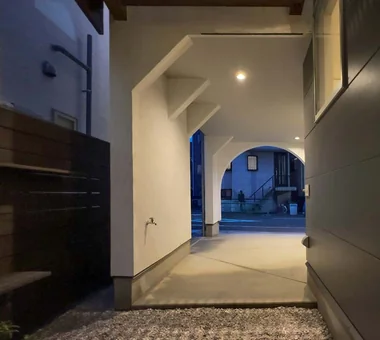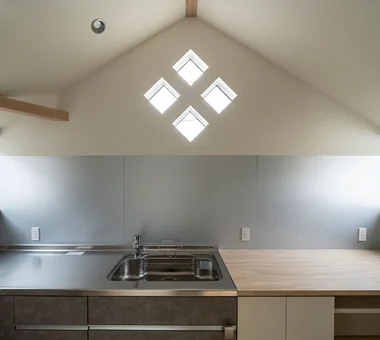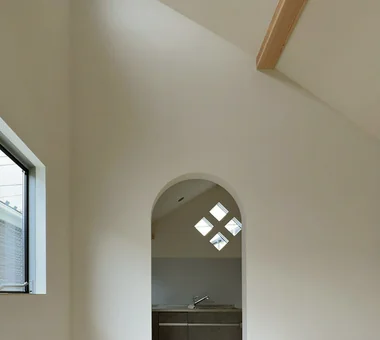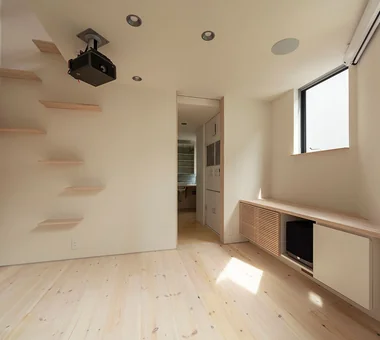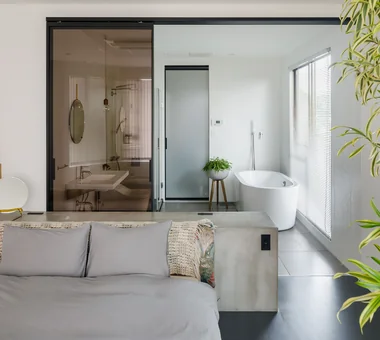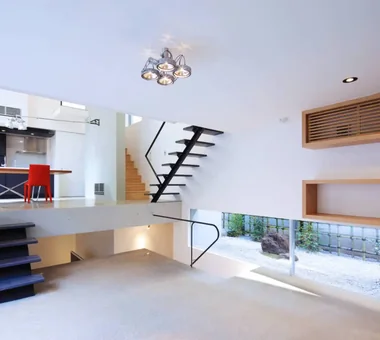
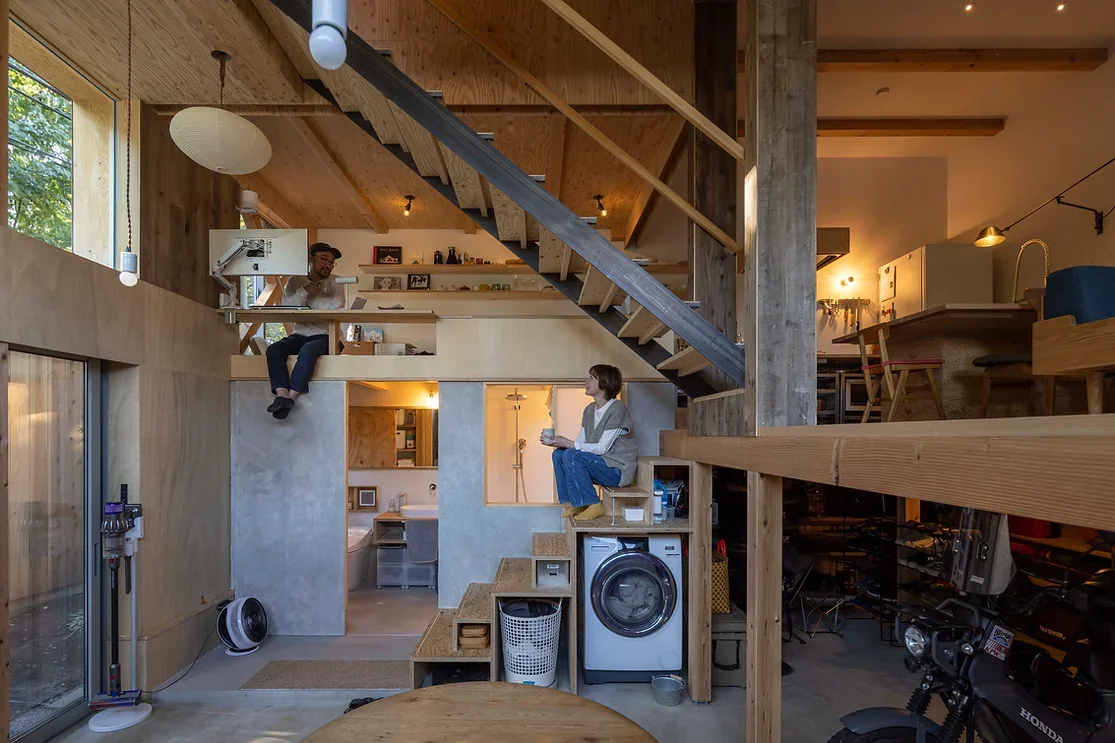
Atelier Cotocoto
Skip Floor|Custom-built homes by architecture firms9Picks|Volumetric Richness Created by Level Differences
Author: Qurasuki Editorial Department
A split-level (skip-floor) configuration introduces intermediate floors between primary storeys, delivering three-dimensional connectivity and variation within a residence. By offsetting floors by half levels, sightlines extend through the interior while spaces are gently articulated, producing openness together with an appropriate degree of privacy. The voids and stepped areas that result can be efficiently programmed as storage, and when combined with vertical atria, daylight and air circulate volumetrically throughout the home. The vertical movement of children between levels also creates natural informal play spaces. Architectural firms carefully propose the potential of such three-dimensional dwellings, taking into account site topography and household composition.

A House Living in Harmony with Wood
Ringo Studio
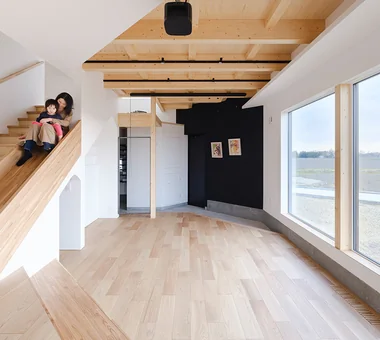
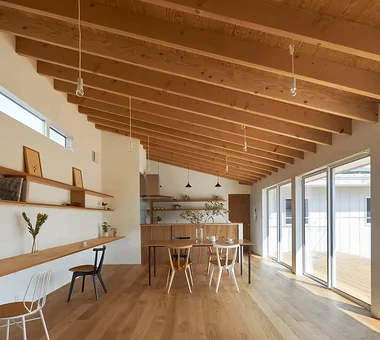
The site is located approximately 2 km from Ōmiya Station in a Category I Low‑Rise Residential Zone. Because the area around Ōmiya Park is designated as a scenic guidance district within a protected landscape, the project was planned under conditions of a 40% building coverage ratio and reserving 10% of the site as green space. The square plan is shifted to the north, providing a garden and large openings to the south; the garden, positioned along the extension of the private access road, admits wind and light and incorporates the neighbouring property’s ginkgo as a borrowed view. A split‑level (skip‑floor) arrangement supplements usable floor area and connects a main volume with generous ceiling heights to a subordinate low‑ceiling volume in an open, integrated manner. By employing prefecture‑sourced Nishikawa cedar as both structural timber and finish material, the interior is kept free of excessive subdivision, preserving a sense of spatial continuity and a coherent material expression.
-
-
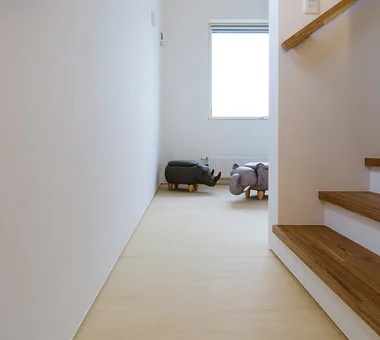
Widened corridor to second-floor private rooms forms an open space
Ringo StudioSaitama City, Saitama Prefecture -
-
-
Six varying ceiling heights generate diverse spatial experiences and rhythm
Ringo StudioSaitama City, Saitama Prefecture -
Hillside House
Far East Design Lab.
A residence sited within a housing district on the slopes of the Tama Hills. Making use of a plot that sits a half level below the street, two primary floor levels were arranged at the street and site elevations and linked by staggered split-level connections, creating an open spatial volume approximately 2.5 storeys in height. Each floor offers panoramic views across the town, while the upper levels afford vistas that convey a strong sense of the sky. The living room, which opens onto a garden set a half level below the road, provides an expansive yet private interior space.
House of Four Pavilions and an Alley | Four-Corner House
Yoshihiro Yamamoto Architects Associates
This house is located on a hillside in Sakai City, Osaka Prefecture. Within an 8.1‑meter square house-form volume, four functionally distinct, smaller house-like volumes are arranged, creating a cruciform interstitial space with alley-like distortions between them. The spaces open and close while remaining continuous, generating diverse relational conditions for daily life. The exterior presents an abstract house form clad in the tactile, representational texture of charred cedar, while the interior, despite a complex skip-floor configuration, is conceived as a simple white cube.
-
Different spaces are connected through the windows.
Yoshihiro Yamamoto Architects Associates302, Zeniya Honpo Main Building, 14-6 Ishigatsujichō, Tennōji-ku, Osaka -
Living room featuring a large staircase. At a half level above, the four‑corner space contains the dining kitchen.
Yoshihiro Yamamoto Architects Associates302, Zeniya Honpo Main Building, 14-6 Ishigatsujichō, Tennōji-ku, Osaka -
A door fitted with antique glass panels serves as the entrance to the living room.
Yoshihiro Yamamoto Architects Associates302, Zeniya Honpo Main Building, 14-6 Ishigatsujichō, Tennōji-ku, Osaka -
Entrance leading to the doma; the floor is mortar tinted with sumi ink.
Yoshihiro Yamamoto Architects Associates302, Zeniya Honpo Main Building, 14-6 Ishigatsujichō, Tennōji-ku, Osaka -
House of Four Pavilions and an Alley | Four-Corner House
Yoshihiro Yamamoto Architects Associates302, Zeniya Honpo Main Building, 14-6 Ishigatsujichō, Tennōji-ku, Osaka -
Inside the small house—daylight pours in through the skylight.
Yoshihiro Yamamoto Architects Associates302, Zeniya Honpo Main Building, 14-6 Ishigatsujichō, Tennōji-ku, Osaka
House in Asahi Ward
Coo Planning
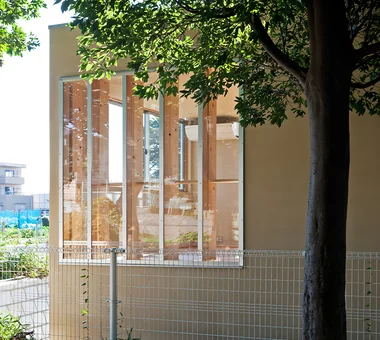
Located in a residential neighborhood of Asahi Ward, Osaka, the house occupies a site that faces neighboring properties on all sides except the street frontage. With houses also lining the opposite side of the road, the design intentionally omits openings on the primary elevation. The exterior is clad in black Galvalume steel sheeting, executed in a long-run single-seam profile. Viewed through a steel sliding entrance door, the interior—centred on larch plywood—presents a contrasting palette, its character animated by varying expressions of natural light.
-
-
-
-
-
The building’s front facade is designed without windows to maintain privacy.
Coo Planning201, M'S Kyomachibori Building, 1-7-17 Kyomachibori, Nishi-ku, Osaka City, Osaka Prefecture -
Residence Featuring an Indoor-Integrated Terrace
Archiplace
This residence serves as the couple’s final home after childrearing, designed for them to cherish everyday living. The second floor, which forms the core of daily life, arranges the living and dining spaces around a southeast-facing terrace. The terrace, enclosed by roof and walls, functions as a semi-outdoor space that shields views from the outside while allowing occupants to remain close to nature. A music room on the first floor gives rise to changes in floor level, a double-height void, and an observation terrace, which together introduce spatial diversity and continuity in this three-story timber-framed house.
-
Seamless transition created by using the same tile flooring indoors and outdoors
Archiplace502 Palm House Hatsudai, 1-20-2 Honmachi, Shibuya-ku, Tokyo -
The indoor terrace brings brightness and a sense of security to the living-dining-kitchen area, strengthening the bond between nature and the home
Archiplace502 Palm House Hatsudai, 1-20-2 Honmachi, Shibuya-ku, Tokyo -
Living room walls softly illuminated by indirect lighting
Archiplace502 Palm House Hatsudai, 1-20-2 Honmachi, Shibuya-ku, Tokyo -
Evening view of the indoor-integrated terrace
Archiplace502 Palm House Hatsudai, 1-20-2 Honmachi, Shibuya-ku, Tokyo -
A dedicated household work corner with a built-in desk and bookshelf is located beyond the kitchen
Archiplace502 Palm House Hatsudai, 1-20-2 Honmachi, Shibuya-ku, Tokyo -
By connecting to the outdoors through the indoor-integrated terrace, the living room becomes a protected sanctuary
Archiplace502 Palm House Hatsudai, 1-20-2 Honmachi, Shibuya-ku, Tokyo
House Along the Jōsui Canal
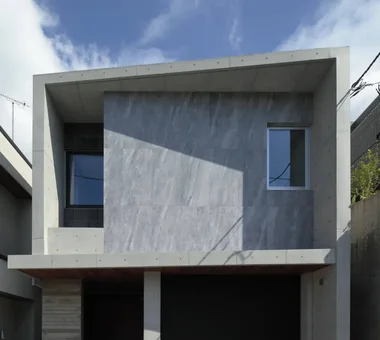
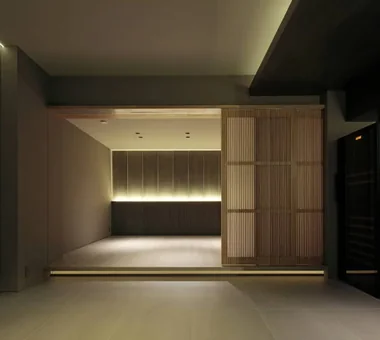
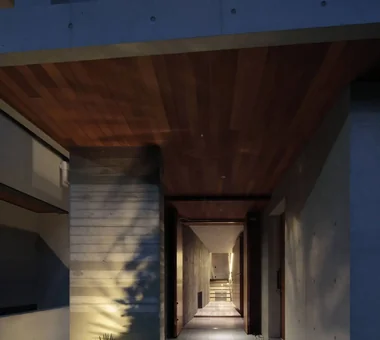
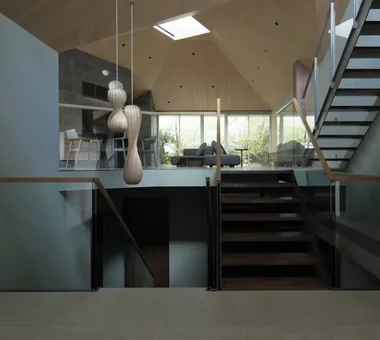
Atelier Cotocoto
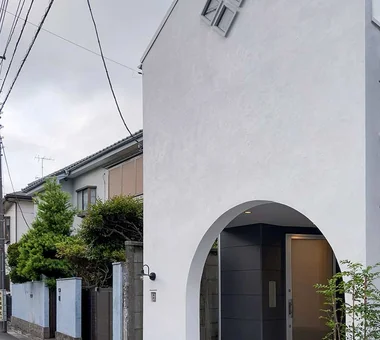
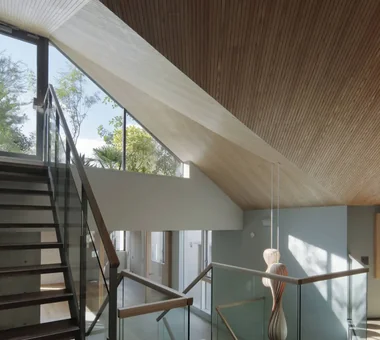
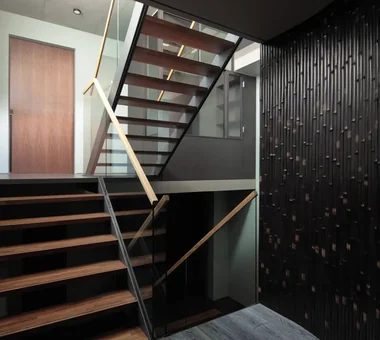
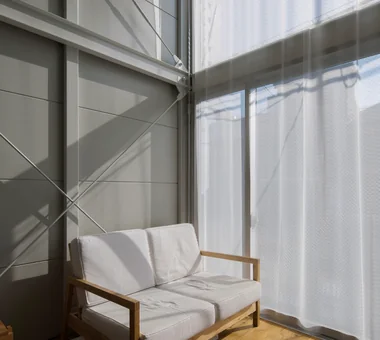
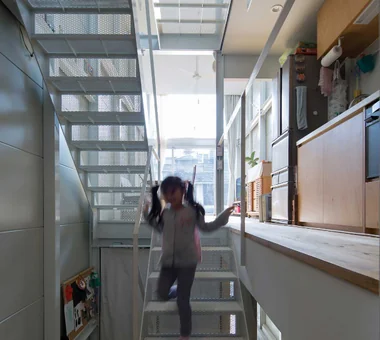
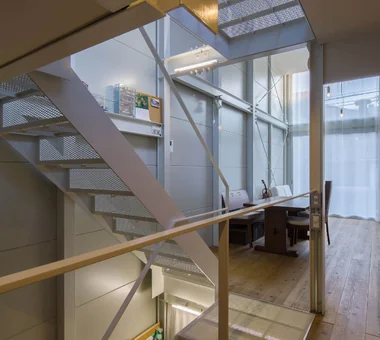
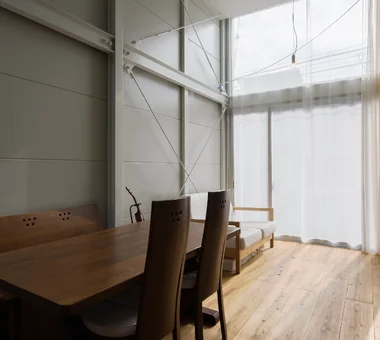
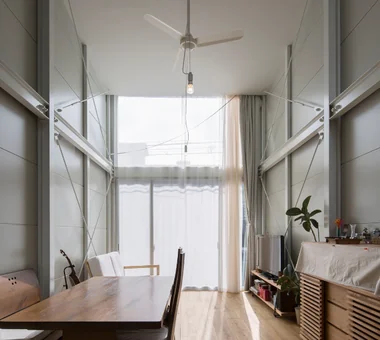
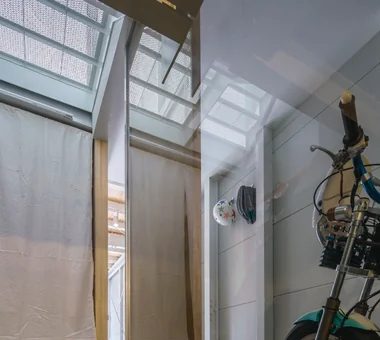
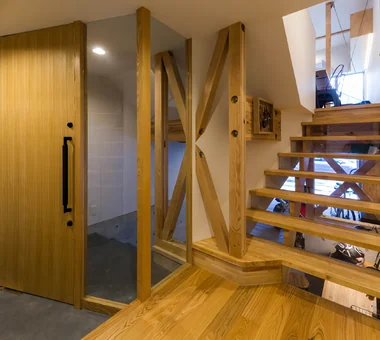
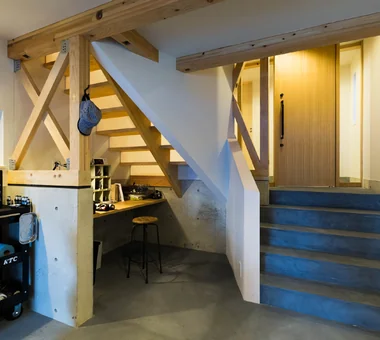
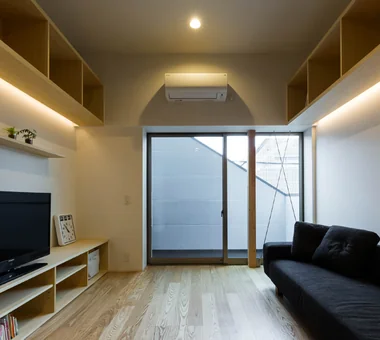
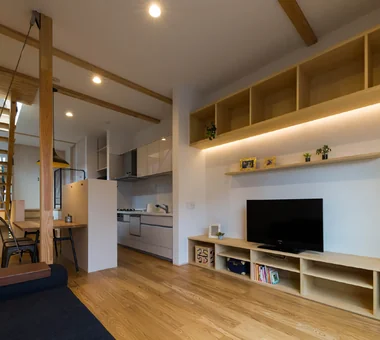
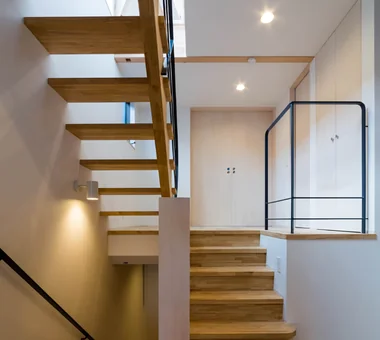
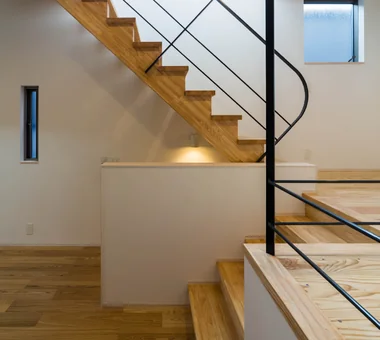
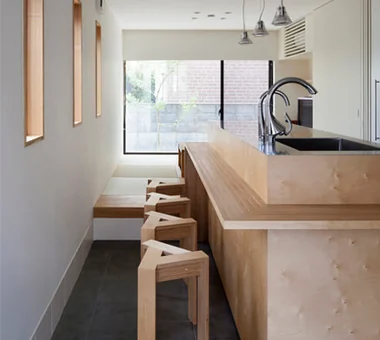
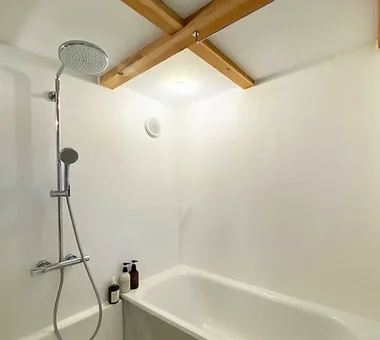
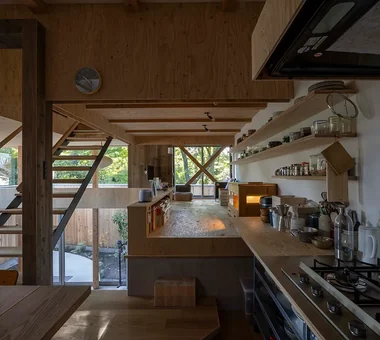
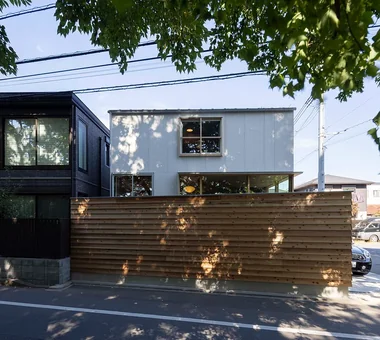
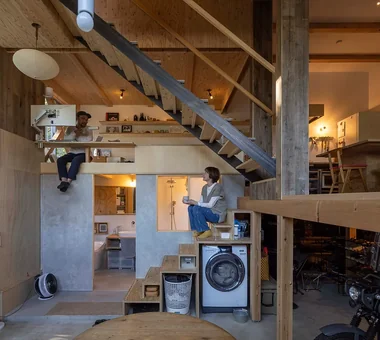
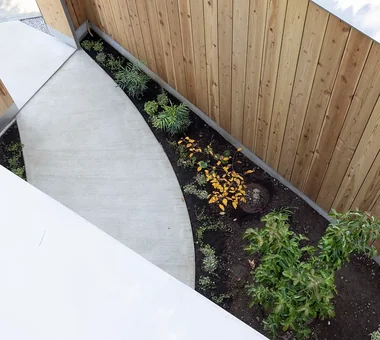
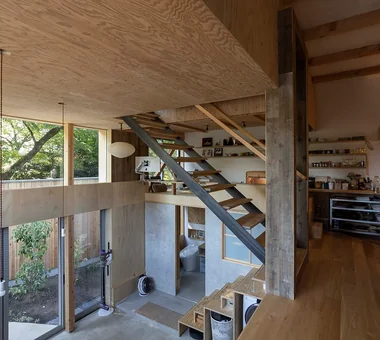
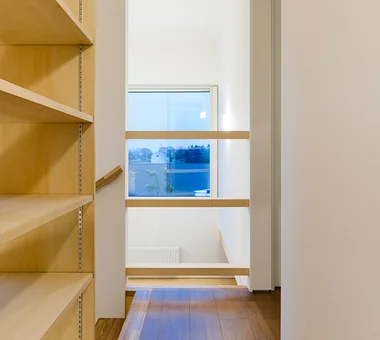
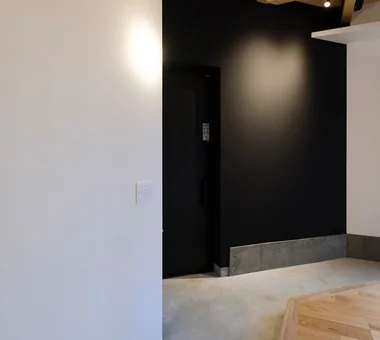
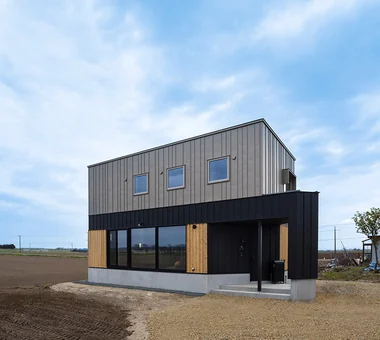
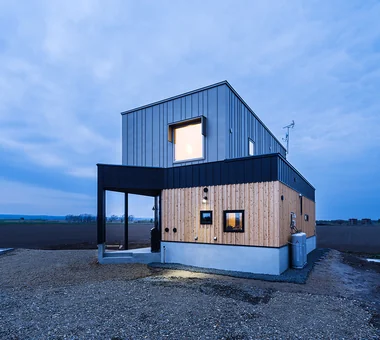
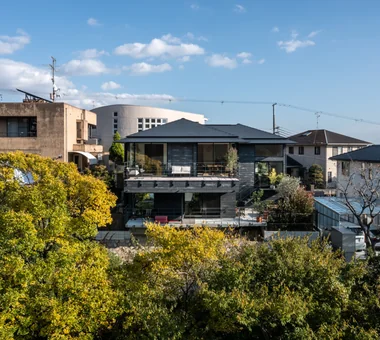
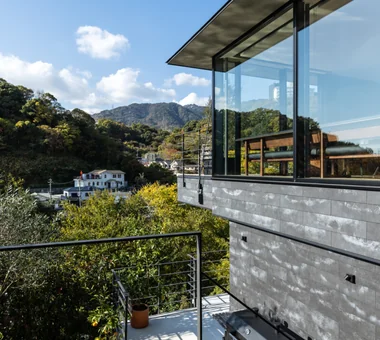
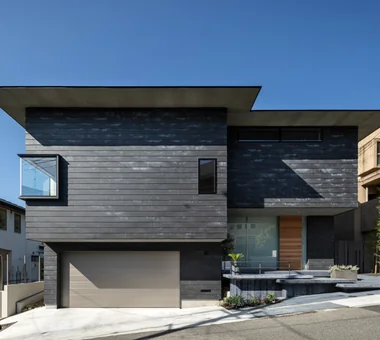
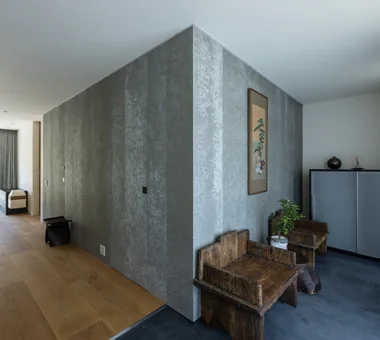
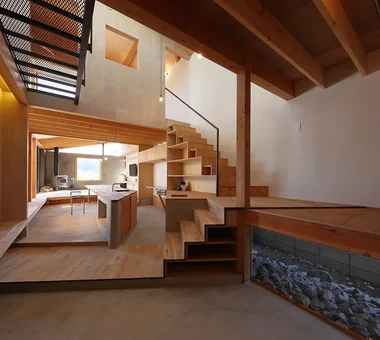
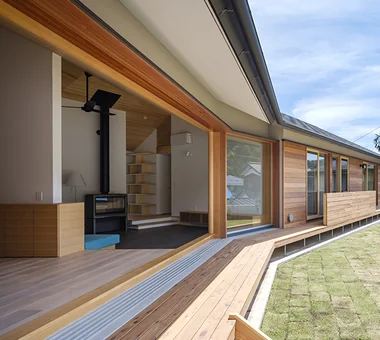
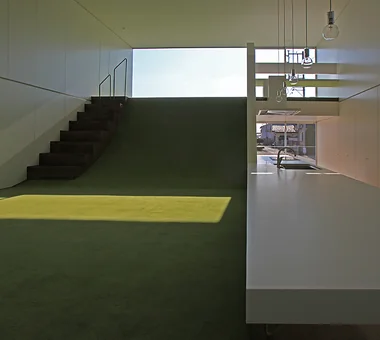
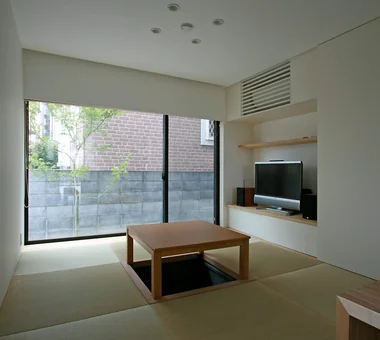
This compact live–work residence was designed within a scenic preservation district along the Tamagawa Aqueduct. A single, high‑ceilinged, open‑plan volume is organized as a skip‑floor composed of three staggered levels of differing heights — an earthen‑floored entry with underfloor storage, a living/dining/kitchen (LDK), and a small raised platform — creating visually concealed boundaries between each partner’s workspaces and private domains. From the LDK, set a half‑level above, one looks down onto an inner courtyard enclosed by the earthen‑floored area and a timber board fence; this arrangement screens the interior from external sightlines while preserving views toward the natural landscape along the aqueduct.
-
-
-
-
-
-
The skip-floor configuration naturally separates workspaces and private areas.
Atelier Cotocoto4 Sekimachiminami, Nerima-ku, Tokyo
Garage House Featuring a Skip-Floor Design
JYU ARCHITECT
This garage house is planned for a corner lot of approximately 30 tsubo (about 99 m²). A split-level (skip-floor) arrangement that leverages the site’s level differences mitigates moisture and water ingress from the culvert beneath the sidewalk while creating a variety of interior spaces. The program includes a well-lit covered garage, a living room with a sloped ceiling, a dining area with generous ceiling height oriented to frame views of a specimen tree, an all‑stainless‑steel kitchen with a large-capacity pantry, a bright semi‑basement children’s room, a sewing atelier, and dedicated storage for road bicycles. The building attains thermal insulation performance equivalent to Grade 5 or higher and is equipped with a seismic‑damping structural system.
Tower of Light and Wind
Kumi Inoue Architects
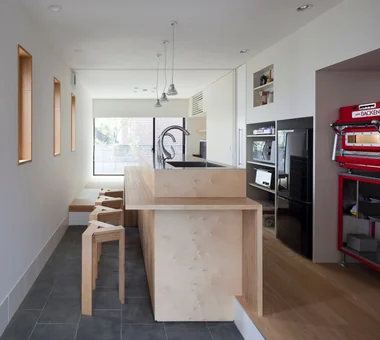
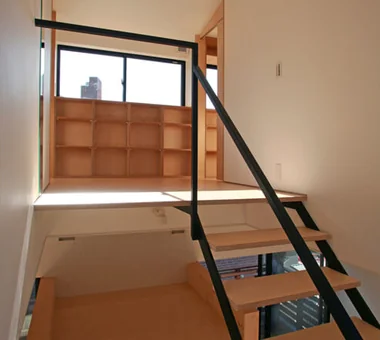
A residence located in a residential neighborhood in Ikuno Ward, Osaka. Street-facing openings are minimized, with a plan that admits daylight and breezes from above the central staircase. East–west skip floors introduce level changes whose gaps allow air and light to circulate. In winter, warm air beneath the floor is circulated via the staircase to moderate the interior environment. The garage and the earthen entry (doma) are configured as an integrated space that screens views from the exterior, creating a calm dwelling that harmonizes with existing reclaimed-wood furniture.
-
The entrance foyer is actively used with desks and sofas placed within.
Kumi Inoue Architects2-6-15 Kuwazu, Higashisumiyoshi-ku, Osaka City, Osaka Prefecture -
The parking area connects to the approach, creating a semi-outdoor space.
Kumi Inoue Architects2-6-15 Kuwazu, Higashisumiyoshi-ku, Osaka City, Osaka Prefecture -
The central stair-shaped atrium gently divides the space.
Kumi Inoue Architects2-6-15 Kuwazu, Higashisumiyoshi-ku, Osaka City, Osaka Prefecture -
This is a loft in the children's room, receiving light from the staircase.
Kumi Inoue Architects2-6-15 Kuwazu, Higashisumiyoshi-ku, Osaka City, Osaka Prefecture -
The entrance connects directly to the staircase.
Kumi Inoue Architects2-6-15 Kuwazu, Higashisumiyoshi-ku, Osaka City, Osaka Prefecture -
The rooftop serves as a play area with a children's pool.
Kumi Inoue Architects2-6-15 Kuwazu, Higashisumiyoshi-ku, Osaka City, Osaka Prefecture
House with Skip Floors
Tatsumi Negishi Architectural Studio
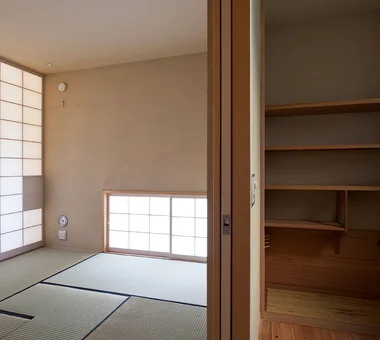
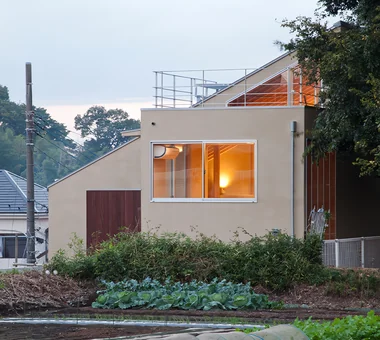
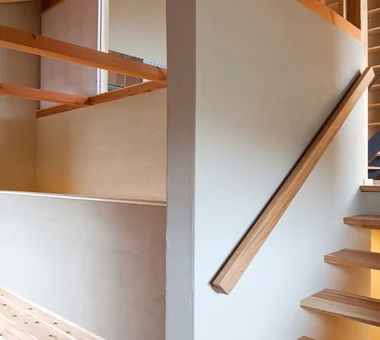
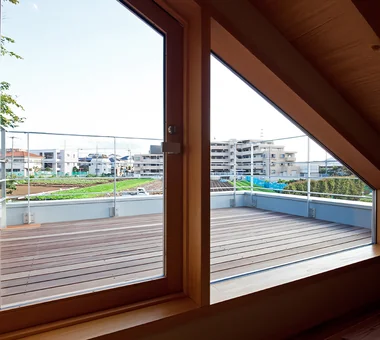
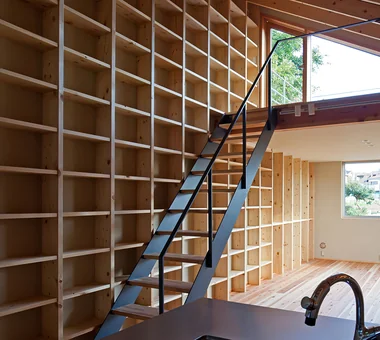
An offset skip‑floor residence arranged in half‑level increments to respond to the site's topographical variations. Vertical, horizontal and diagonal spatial relationships, together with a double‑height void, gently interconnect the family's living areas. A tea room is positioned on the ground floor as part of the entrance; built‑in bookshelves are provided on the living room wall; and a staircase establishes a circulation path to the roof.
-
A rooftop for enjoying beer—a slightly indulgent space
Tatsumi Negishi Architectural Studio532-5 Nakazawa, Hidaka City, Saitama Prefecture, Japan -
-
A tea room integrated seamlessly with the entrance earthen floor
Tatsumi Negishi Architectural Studio532-5 Nakazawa, Hidaka City, Saitama Prefecture, Japan -
A bookshelf spanning the entire wall surface
Tatsumi Negishi Architectural Studio532-5 Nakazawa, Hidaka City, Saitama Prefecture, Japan -
-
-
Homes Featuring Wood-Burning Stoves|Key Points for Home Building|Installation and Thermal-Flow Planning with Safety and Efficiency2026-03-02|Qurasuki Editorial Department -
Homes with Gardens|Key Points for Home Building|Architectural Considerations and Circulation Planning for Cultivating Plants2026-03-02|Qurasuki Editorial Department -
Stylish Lofts|Key Points for Home Building|Strategies for Maximizing Space on Limited Sites2026-03-02|Qurasuki Editorial Department -
Homes for Antique Enthusiasts|Custom-built homes by architecture firms|A Home That Lives with Timeworn Treasures2026-05-11|Qurasuki Editorial Department -
Glass-Enclosed Residences|Key Points for Home Building|Maintaining Privacy While Achieving a Sense of Openness2026-06-24|Qurasuki Editorial Department -
Homes Featuring Traditional Tea Rooms|Key Points for Home Building|Traditional Spatial Design Infused with the Spirit of Chanoyu2026-06-24|Qurasuki Editorial Department