Yu Architectural Design Studio
Stylish Residential Approaches|Key Points for Home Building|A Pleasant Pathway to the Entrance
Author: Qurasuki Editorial Department
The approach leading to the entrance of a residence serves not only to shape the visitor’s first impression but also to prepare the occupant’s mindset upon returning home. Thoughtful planning of stride length and step height, lighting design, and landscape composition significantly influences the emotional transition upon arrival and enhances the sense of security for visitors. Precisely because it is a short distance, meticulous design of this approach space has a profound impact on elevating the quality of daily life.
Circulation Designed to Leverage Site Characteristics.
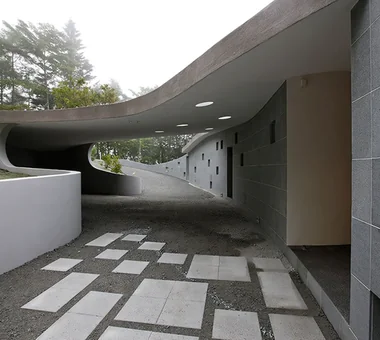
The approach from the street to the entrance should be planned by utilizing the site's shape and topographical variations. Whether to design it as a straight path or a gentle curve significantly influences the overall impression. Even with a short distance, incorporating landscaping and steps can create a dynamic and inviting approach that conveys a sense of depth.
Ensuring Appropriate Width.
An approach width of at least 1.2 meters, allowing people to pass each other comfortably, is ideal; however, depending on site conditions, a width of approximately 90 cm can also function adequately. When considering the use of wheelchairs or strollers, it is advisable to secure a wider width. Additionally, taking into account the growth of vegetation, it is recommended to set a margin in the width to accommodate future expansion.
Selection of Flooring Materials.
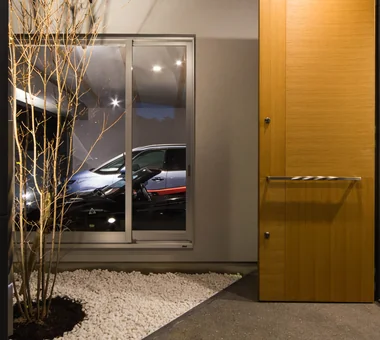
Materials such as stone, tile, concrete, exposed aggregate, and gravel are critical elements that determine the first impression of a residence's approach flooring. Choosing materials that harmonize with the building's exterior creates a sense of cohesion. Additionally, selecting finishes that provide slip resistance, even on rainy days, is essential for safety.
Consideration for Level Differences and Slopes.
When there is a height difference between the road and the entrance, it is resolved by stairs or ramps. The riser height of stairs should be approximately 15 to 18 cm, and the tread depth should be secured at 30 cm or more to facilitate comfortable ascent and descent. An ideal ramp slope is about 1:12; however, depending on site conditions, variations in gradient may be applied. Lighting design is also crucial to ensure visibility during nighttime.
Creating a Sense of Seasonality with Plantings.
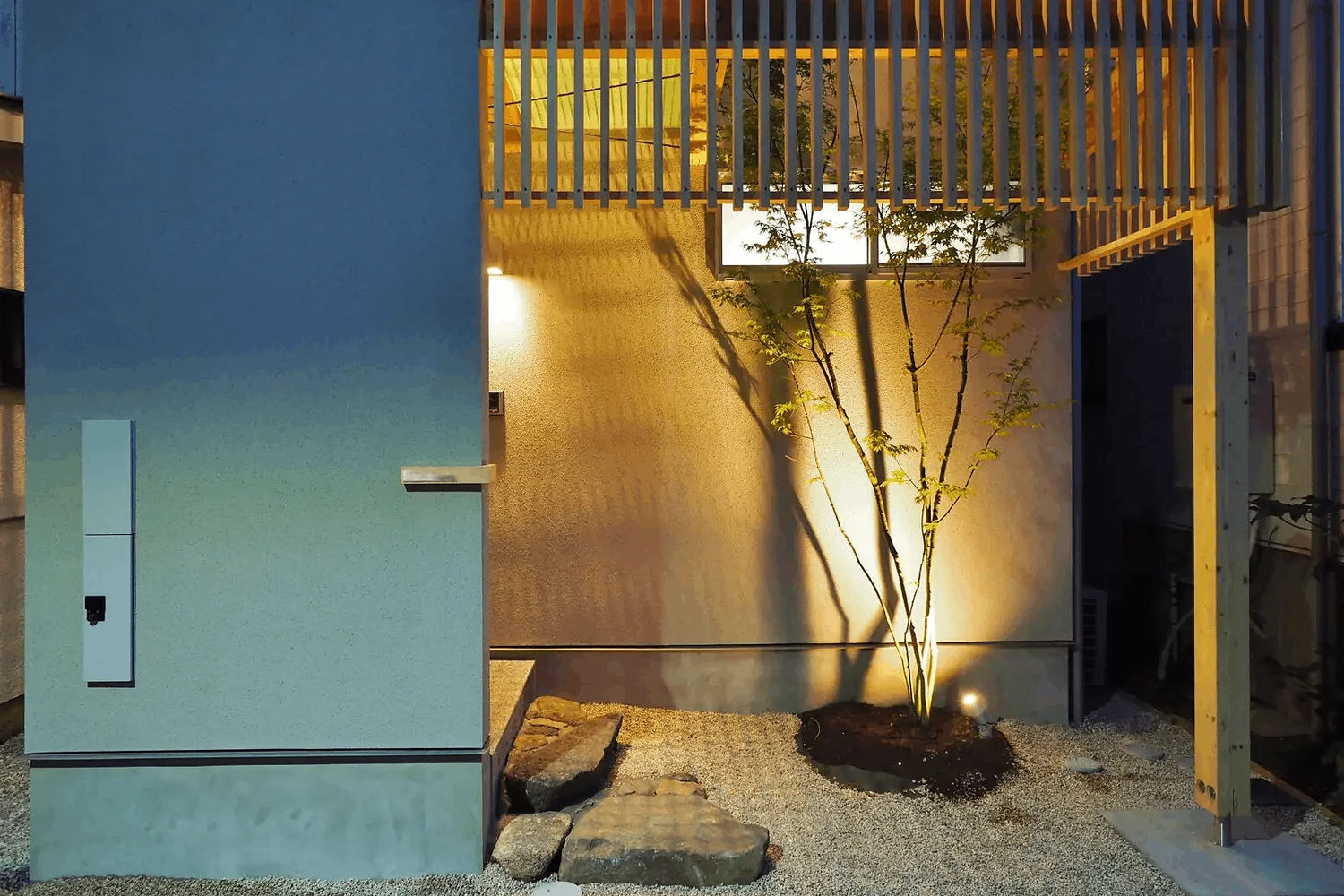
By arranging plantings along the approach, a rich space that reflects the changing seasons is created. Planting a specimen tree beside the entrance and accentuating the ground with shrubs and groundcover generates a refreshing greenery. When selecting tree species, consider their mature size and whether they are deciduous or evergreen.
Creating Nighttime Ambiance through Lighting Design.
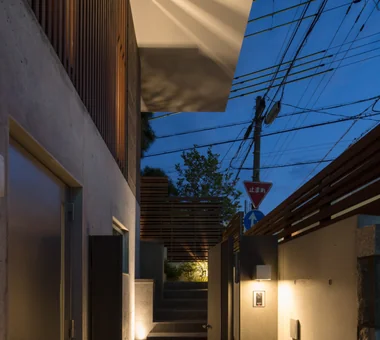
By combining multiple lighting elements such as footlights that illuminate pathways upon returning home at night, uplights that highlight landscaping, and gatepost lights, it is possible to achieve both safety and aesthetic appeal. Incorporating motion sensor-activated lighting further enhances security. It is important to avoid excessive brightness and instead focus on creating a soft, inviting illumination.
Consideration for Privacy.
By appropriately shielding views from the street, it is possible to maintain privacy while also achieving a sense of openness. Thoughtful design of the height of gates and fences, as well as the arrangement of plantings, can provide screening effects without creating a closed-off atmosphere. This is especially effective when the entrance door is directly visible from the street, where planning buffer zones with vegetation or structural elements can serve as an effective privacy measure.
Relationship with Parking Spaces.
By clearly delineating the approach and parking spaces, pedestrian safety can be ensured. Changing flooring materials or using curbs and plantings to separate these areas enhances visual clarity. However, avoiding complete separation and maintaining an appropriate connection creates a cohesive exterior environment.
Ensuring Maintainability.
Since the approach is a frequently used area, ease of cleaning and maintenance is crucial. When planting deciduous trees, it is advisable to consider the cleaning effort involved and select flooring materials that are resistant to visible dirt and easy to clean. Installing a water faucet is convenient for washing and watering plants.
Universal Design Perspective.
Consider reducing steps and incorporating substrates that allow for the installation of handrails, anticipating future wheelchair use and walking in advanced age. An approach that ensures safety and comfort for all users is fundamental to a home that can be lived in for a long time.
View from the Approach.
The views encountered while walking along the approach are a crucial consideration. Seeing the design of the entrance door directly ahead or glimpses of the garden enhances a sense of anticipation. Additionally, taking into account the scenery when looking back ensures the approach feels pleasant both when leaving and returning home.
Harmony and Integration with the Building.
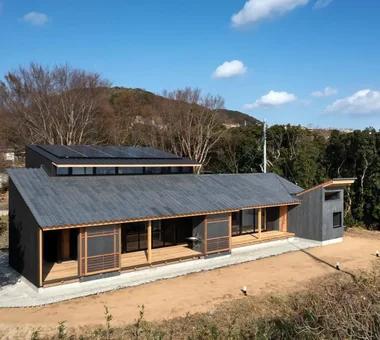
Designing the approach in unity with the building's exterior creates a cohesive sense of unity throughout the entire site. Utilizing the same materials for the gateposts as the exterior walls, or matching color tones, achieves a harmonious and aesthetically pleasing residence. By planning the landscaping and exterior works concurrently with the building, rather than postponing them, a more refined and sophisticated finish can be expected.






 Homes in Harmony with Nature|Introduction to Architecture Firms|A Residence That Integrates Nature's Bounty into Everyday Life
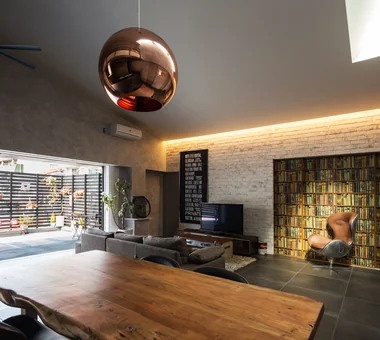 Homes for Design Enthusiasts|Custom-built homes by architecture firms|A Home Infused with Aesthetic Sensibility
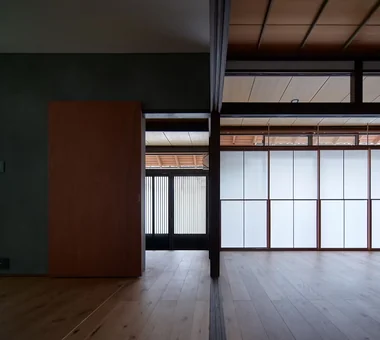 Homes for Antique Enthusiasts|Key Points for Home Building|Harmonizing Architecture and Interior Design through Materiality
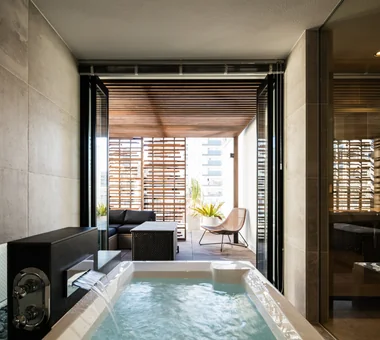 A Residence for Relaxation|Custom-built homes by architecture firms|A Home Where Mind and Body Unwind
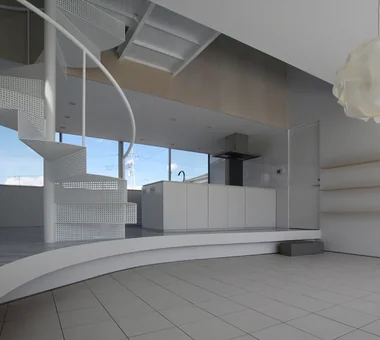 Contemporary Design Residences|Key Points for Home Building|Crafting Refined Spaces that Reflect Contemporary Sensibilities
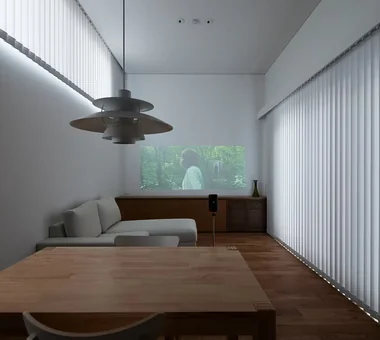 Homes Featuring Dedicated Theater Rooms|Introduction to Architecture Firms|Living in a Space Immersed in Visual Media