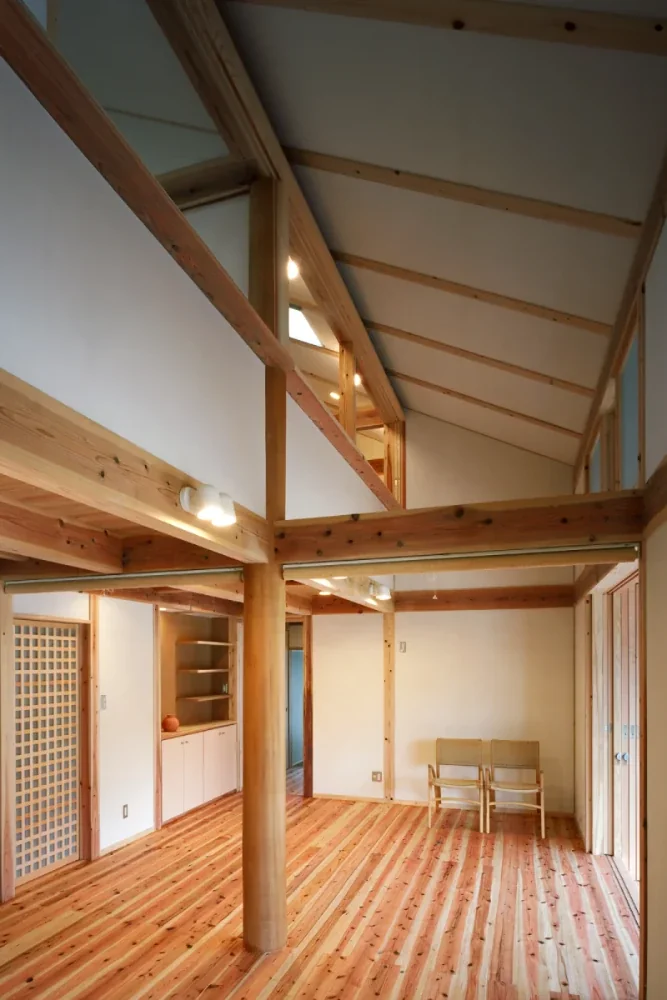
芦田成人建築設計事務所
Solid Wood House|Home Building Q&A
Author: Qurasuki Editorial Department
In a home with solid wood, the texture, hue, and aging of the wood itself relate to the home's impression and lifestyle. Unlike uniform finishes, wood grain and knots differ from piece to piece, and colors and expressions evolve over time. Perspectives on the material vary depending on whether those changes are embraced as a charm or if maintaining a stable state is preferred. Moreover, using solid wood on expansive surfaces like floors and walls versus partial applications changes its presence throughout the space. Approaches to scratches, grime, and daily maintenance time are also relevant elements when considering life with solid wood. We organize questions concerning material changes and lifestyle compatibility that easily arise in homes with solid wood.
What timber is referred to as solid wood?
Timber cut from logs and used basically as a single piece of wood is called solid wood. Unlike engineered wood made by bonding thin woods together, manufacturing methods differ, and a characteristic is enjoying the wood grain and texture of the wood itself. It can be used in various locations, including floors, fixtures, and furniture.
What sensation do solid wood floors have when walked on barefoot?
Because wood has relatively small thermal conductivity, compared to metals or tiles, it is a material that does not rapidly rob heat when touched. Also, hardness and surface sensations differ by tree species, and coniferous woods easily yield soft tactile foot sensations. Touching actual samples to verify hardness and temperature feel before choosing is recommended.
Is it true that solid wood has humidity-conditioning effects?
Wood has properties absorbing and releasing moisture matching surrounding humidity, expecting a certain humidity-conditioning action. However, whether indoor humidity can be largely controlled varies by usage amount, surface area, painting, and indoor environment. Considering it combined with insulation, ventilation, and air conditioning without relying solely on solid wood properties is important.
Solid wood is said to undergo expansion, contraction, and warping; are there countermeasures?
Because wood absorbs and releases moisture matching surrounding humidity, dimensions change due to drying and moisture absorption. For flooring materials and the like, appropriately managing installation clearances, moisture content, and substrate conditions is important. Understanding slight seasonal movement as a property of wood and selecting details suitable for tree species and installation methods is important.
Do solid wood floors scratch easily?
Hardness differs by tree species, and soft woods tend to easily receive scratches and dents. On the other hand, flooring materials whose surfaces can be sanded and refinished exist, and they can sometimes continue to be used while repairing scratches and dirt. Not completely avoiding scratches, but enjoying material changes as traces of lifestyle is one of the attractions of solid wood.
How should solid wood tree species be chosen?
Hard hardwoods like oak tend to resist scratching, while coniferous woods like cedar and pine easily yield soft tactile foot sensations. Because colors, wood grains, and aging changes also differ by tree species, choosing from both desired hardness and texture is important. Confirming color combinations with fixtures and furniture, not just floors, is also recommended.
Can solid wood floors be used in combination with floor heating?
While floor-heating-compatible solid wood products exist, not all solid wood is suited for floor heating. Because they can receive effects from drying and dimensional changes due to temperature fluctuations, selecting floor-heating-compatible tree species, products, and installation methods is necessary. Confirming compatibility with manufacturers or constructors before introduction is important.
What health advantages do solid wood homes offer?
Because solid wood allows wood itself to be used as finishes, a charm is being able to closely feel wood textures and scents. On the other hand, thinking uniformly that special health effects are obtained just because it is solid wood cannot be done. When considering indoor environments, confirming overall building material selections including adhesives and paints, as well as ventilation planning, not just wood, is important.
How much maintenance do solid wood furniture and fixtures require?
Required care differs by surface finish, such as unfinished, oiled, or urethane-painted. Oiled finishes may require re-painting depending on conditions. Making dry wiping basic for daily care, and caring with methods suitable for the finishing material used when dirt or moisture attaches is important.
How does solid wood differ from engineered wood in terms of cost?
Solid wood has wide price variations depending on tree species, dimensions, and quality, and can become more expensive than engineered wood. Especially large-dimension materials and rare tree species easily increase in price. On the other hand, products allowing surface sanding and refinishing exist and are sometimes chosen on the premise of long-term use. Considering maintenance alongside initial costs is recommended.
How can aging changes in solid wood be enjoyed?
Wood changes color tones while receiving influences from light, air, and usage environments. Because color deepening and change directions differ by tree species, changes in expression over years can be enjoyed. Leaving furniture or rugs in the same position for long periods can cause sun-fading differences, so changing placements as needed is also a method.
How much humidity management do solid wood homes require?
Extreme drying or excessive moisture can lead to wood expansion/contraction, warping, or cracking. Especially in environments where indoor spaces become overly dry, such as winter heating, confirming wood conditions is important. Because specific humidity guidelines differ by tree species and products, managing matching installer or manufacturer recommended conditions is recommended.
Can solid wood be used in wet areas?
While solid wood can be used in wet areas, locations exposed to moisture for long periods require consideration for expansion, discoloration, and decay. Appropriately selecting tree species, finishes, and details, avoiding leaving water splashes unattended, and performing ventilation are also important. Selecting products and finishes suited to the usage location and confirming maintenance methods with constructors provides peace of mind.
How do solid wood homes accommodate future renovations?
For solid wood floors, products exist where scratches and dirt can be addressed by sanding and refinishing surfaces. However, re-finishable counts and methods differ by plank thickness and surface finishes. When considering future repairs, recording product specifications and maintenance methods at construction time aids later renovations.
What points should be communicated to the architect when designing a solid wood home?
It is important to specifically convey wood textures sought, such as preferred tree species, colors, wood grains, and hardness. Share floor heating usage plans, wet-area adoption, and effort that can be expended on maintenance. Choosing while touching actual samples and viewing existing construction examples helps grasp post-completion images.


 A Home for Living with Antiques|Custom Home Examples by Architectural Offices
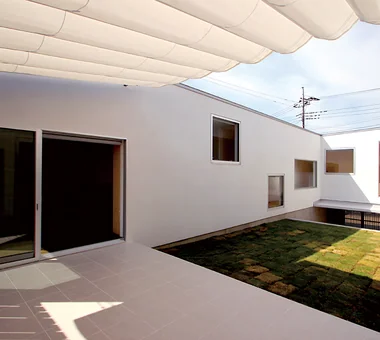 Homes Designed for Living with Dogs|Custom Home Examples by Architectural Offices
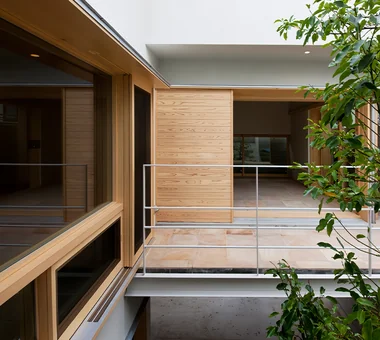 House with Wooden Window Sashes|Custom Home Examples by Architectural Offices
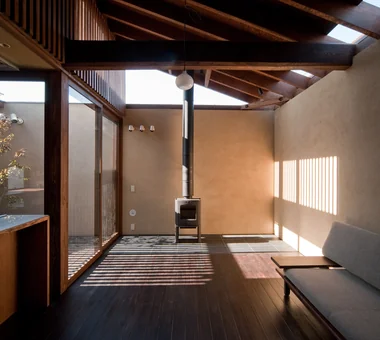 Homes Featuring Wood-Burning Stoves|Introduction to Examples by Floor Plan & Room Type
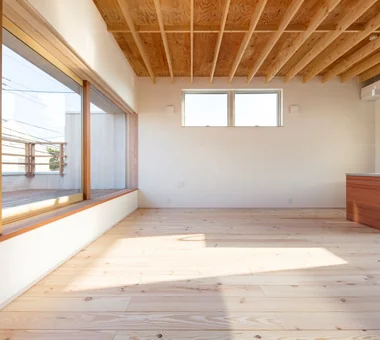 House with Second-Floor Living Room|Introduction to Examples by Floor Plan & Room Type
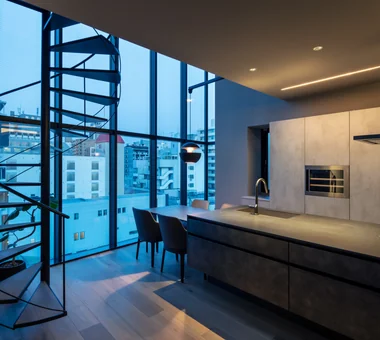 House with a Spiral Staircase|Custom Home Examples by Architectural Offices