12mm Architects
Modern Japanese-Style Residence|Key Points for Home Building|A Wa-Modern Space Where Traditional Beauty and Contemporary Functionality Resonate
Author: Qurasuki Editorial Department
The wa-modern design, which fuses Japanese traditional aesthetics with contemporary functionality, is a widely favored residential style. The tactile quality of tatami mats, the scent of cedar boarding, and light filtered through shoji screens are characteristic elements of Japanese architecture that harmonize with the simplicity and utility of modernist principles. Color palettes are unified around the hues of natural materials, and ornamentation is restrained, while traditional features such as the tokonoma alcove and an inner courtyard garden (tsuboniwa) are strategically located. Concurrently, modern-life requirements—building services, durability and performance—must be thoughtfully integrated in concealed assemblies. By reconciling time-honored Japanese wisdom with contemporary technology, the design delivers a high-quality home that endures and is cherished across generations.
A Contemporary Reinterpretation of Traditional Japanese Materials.
By combining traditional Japanese materials such as tatami mats, shoji screens, fusuma sliding doors, and earthen walls with modern design, a Japanese-modern space is created. Incorporating tatami as a raised seating area in a corner of the living room, while respecting tradition and exploring new expressions, embodies the essence of Japanese modernity.
Composition Emphasizing Straight Lines and Horizontal Lines.
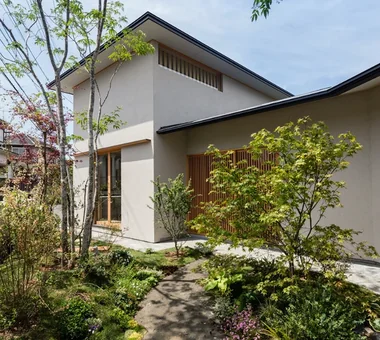
Japanese architecture is characterized by a simple and beautiful composition that emphasizes horizontal lines. By extending eaves and arranging windows in a continuous sequence, the aesthetics of Japanese design can be incorporated into contemporary architecture. The linear design, stripped of unnecessary ornamentation, creates a serene and dignified space.
The Comfort of Floor Seating with a Tatami Space.
By installing tatami mats in a corner of the living room or in a Japanese-style room, the lifestyle of sitting directly on the floor is revived. The softness and fragrance of tatami mats soothe the Japanese spirit. Creating a raised platform allows the space to function as seating while also providing storage. Tatami imbues the home with the essence of traditional Japanese culture.
Soft Light Through Shoji Screens.
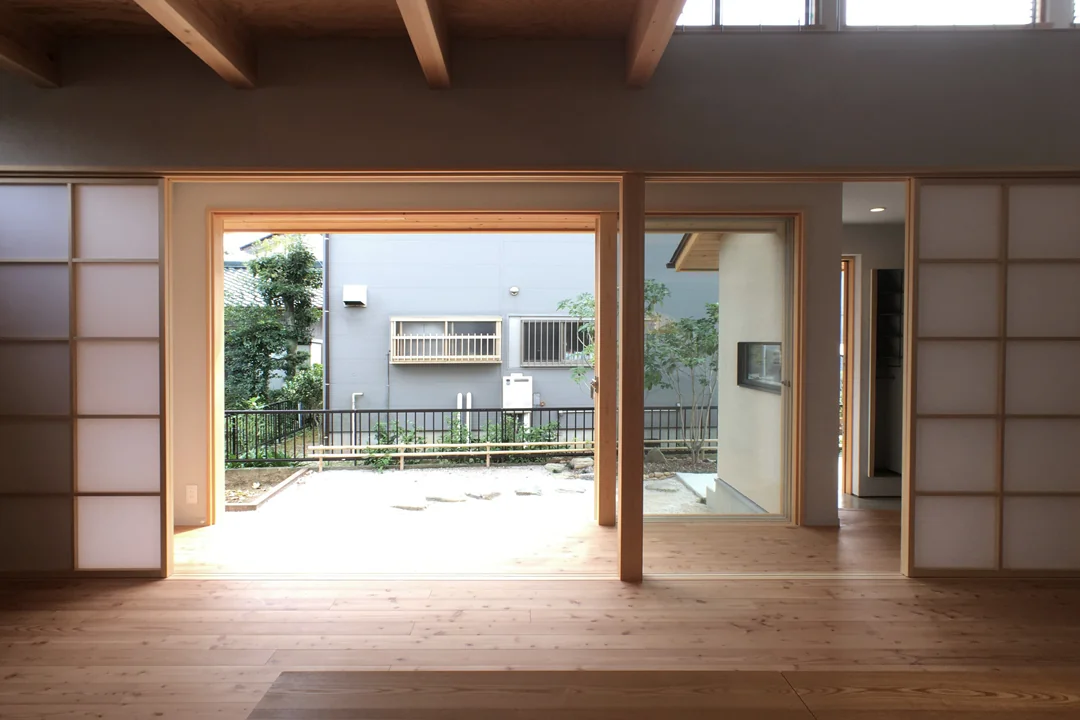
Shoji screens diffuse light, creating a brightness that gently envelops the space. They soften direct sunlight while maintaining interior illumination, making them an ideal architectural element suited to Japan's climate and environment. In contemporary design, variations such as glass shoji offer diverse adaptations. The quality of light significantly defines the traditional Japanese ambiance.
Connecting Interior and Exterior through Engawa and Nure-en.
The engawa serves as an essential element in Japanese architecture, functioning as an intermediate space between the interior and the garden. In contemporary residences, it is reinterpreted as a wooden deck, creating a place to relax while enjoying views of the garden. This provides a quintessentially Japanese spatial experience where the inside and outside are gently connected.
Controlling Sightlines with Lattices and Screens.
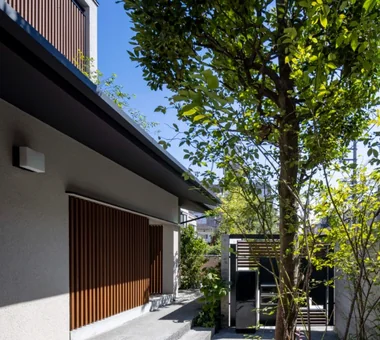
By utilizing lattice doors and screens, it is possible to delicately control sightlines by obstructing views while allowing light and air to pass through. This approach protects privacy from the outside while creating a space free from a sense of confinement. The subtle translucency embodies the aesthetic sensibility of Japanese design.
Creating Seasonal Ambiance with a Tokonoma.
The tokonoma is a uniquely Japanese architectural alcove designed for displaying hanging scrolls and ikebana floral arrangements. While often simplified in contemporary residences, incorporating a niche in the wall to showcase seasonal flowers or artworks effectively expresses the essence of Japanese aesthetics. The evolving arrangement within the tokonoma brings a dynamic sense of seasonality to daily living.
Flexible Spaces with Sliding Doors.
Sliding doors such as fusuma and shoji offer flexibility by connecting spaces when opened and creating private rooms when closed. The dynamic transformation of space through opening and closing is a distinctive feature of traditional Japanese residences.
Expressing Through Materials with Subdued Colors.
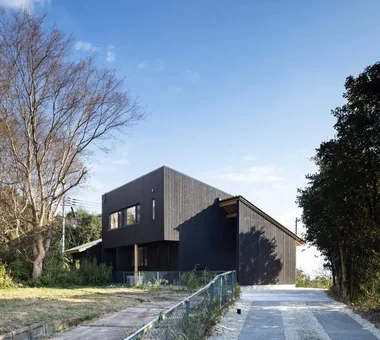
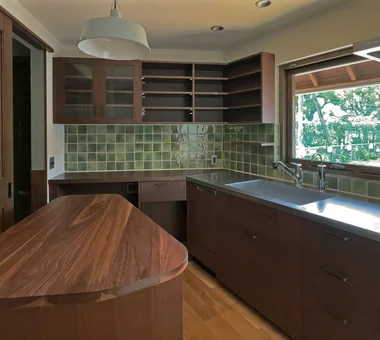
The Japanese modern space is based on low-saturation colors such as white, black, gray, and beige. Instead of relying on color, the space is composed through the textures of materials like wood, earth, paper, and stone, creating a calm and refined atmosphere. The aesthetics of subtraction embody the essence of Japanese design.
Incorporating Nature with a Courtyard Garden.
By incorporating a courtyard garden, one can experience nature up close. A garden arranged with stones, moss, bamboo, and lanterns enriches the space. When the view visible through the window is also integrated as borrowed scenery, it creates a space filled with a sense of openness.
Creating Shadows with Deep Eaves.
Deep eaves block summer sunlight and protect walls from rain. Additionally, the shadows formed beneath the eaves impart depth and elegance to the building. In contemporary architecture, deep eaves evoke a Japanese aesthetic, with the interplay of light and shadow accentuating the beauty of traditional Japanese design.
Warmth Through Plaster-Finished Walls.
Walls finished with plaster materials such as lime plaster or diatomaceous earth impart a handcrafted warmth and distinctive texture. The subtle irregularities, rather than perfectly flat surfaces, create varying expressions depending on the lighting conditions. Plaster walls showcasing the craftsmanship of artisans are an indispensable element in Japanese modern interior spaces.




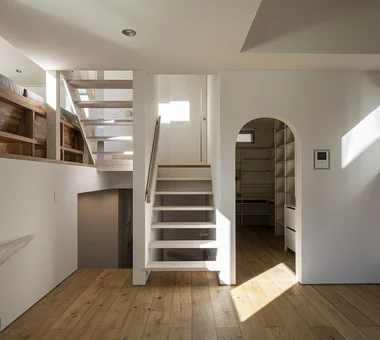 Skip Floor|Pros and Cons|Three-Dimensional Living Spaces
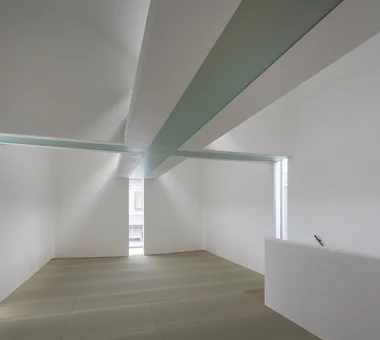 Homes with Atelier Spaces|Key Points for Home Building|An Optimal Atelier Environment for Creative Practice: Daylighting, Ventilation, and Exhibition
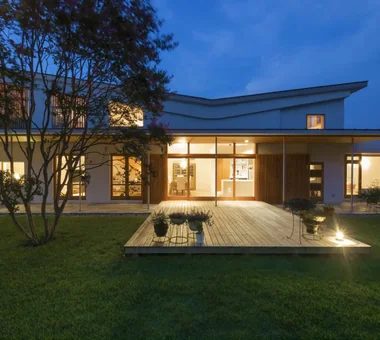 Outdoor Living|Introduction to Architecture Firms|Living Where Interior and Exterior Become One
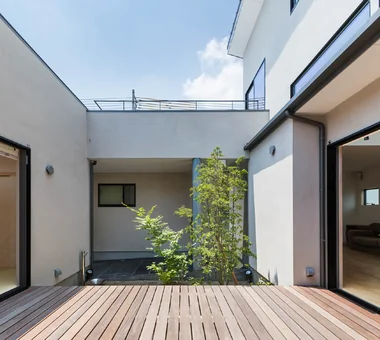 Homes Featuring Courtyards|Key Points for Home Building|Practical Design of Inner Courtyards Combining Privacy and Daylighting
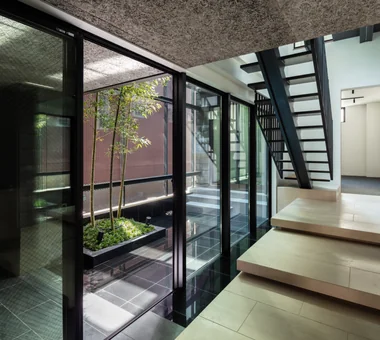 Homes Featuring Courtyards|Custom-built homes by architecture firms|A Residence with an Interior Sky
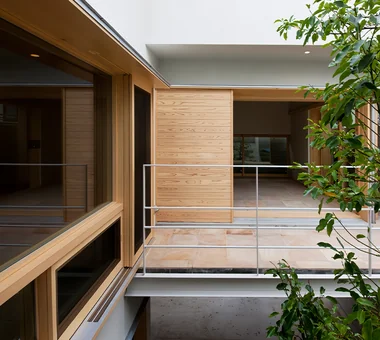 Wooden Sash|Custom-built homes by architecture firms|Warm Materiality