Archiplace
Stylish Entrances|Key Points for Home Building|Design That Achieves Both First Impressions and Practicality
Author: Qurasuki Editorial Department
The entrance serves as a threshold connecting the home to the outside world and is the space where the quality of daily life is initially perceived. Daylighting, ventilation, the functionality of the shoe closet, and psychological comfort collectively determine the pleasantness of daily comings and goings. Balancing practical safety aspects such as security and convenience with an inviting expression that welcomes visitors significantly influences the overall impression of the residence.
Ensuring Appropriate Spatial Dimensions.
The size of the entrance varies depending on the number of family members and the frequency of visitors. Generally, an area of about 3 tatami mats provides ample space for multiple people to put on and take off shoes simultaneously. The balance in depth between the dirt floor area and the hall area is also important; securing sufficient space in each ensures a functional and comfortable entrance.
Storage Capacity Planning.
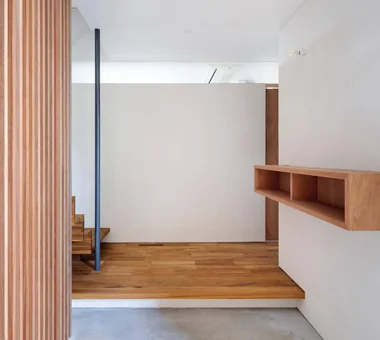
In addition to accommodating the shoes of all family members, it is essential to provide space for storing umbrellas, coats, keys, and small accessories. Enhancing the shoe closet allows the entrance area to remain neat and organized. By incorporating adjustable shelves, the storage can accommodate footwear of varying heights, such as boots and sneakers. Including a dirt-floor storage area further enhances functionality.
Selection and Texture of Flooring Materials.
The entrance floor should be selected with materials that combine durability, ease of maintenance, and aesthetic appeal. Options such as tiles, natural stone, and mortar finishes each have distinct characteristics. Slip resistance is also a critical factor, especially to ensure safety on rainy days. The material of the threshold step is another important element that significantly influences the overall ambiance.
Design and Performance of Entrance Doors
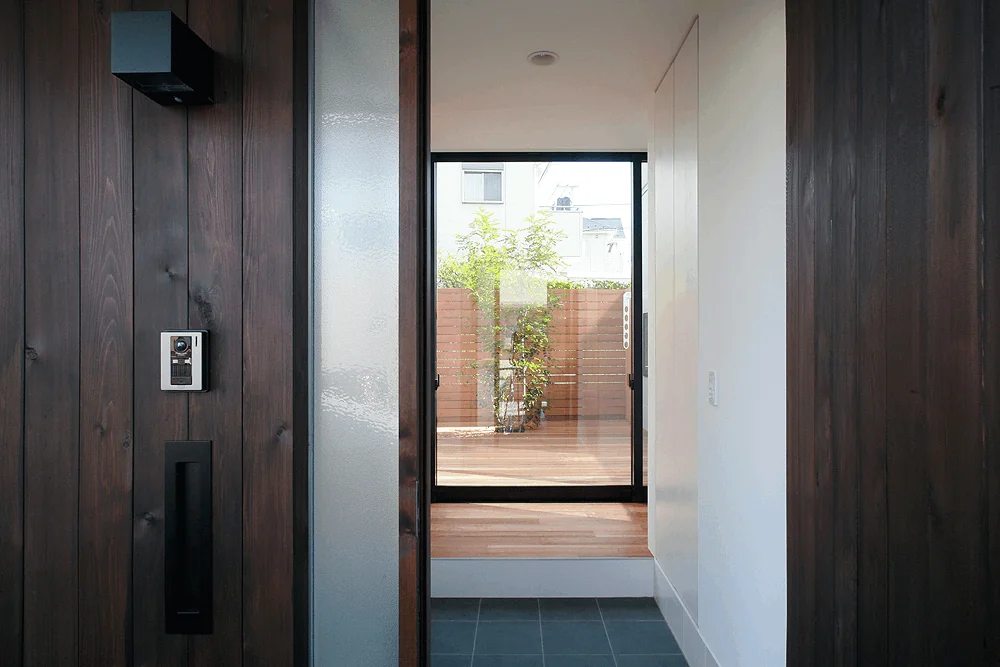
The entrance door serves as the face of a residence. When selecting a door, it is important to consider not only its aesthetic design but also its thermal insulation performance, security features, and natural lighting capabilities. The usability varies depending on the door type, such as double doors, single swing doors, or sliding doors. It is recommended to choose the door’s color and material in harmony with the building’s exterior appearance.
Creating Atmosphere Through Lighting Design.
Entrance lighting requires both practical brightness and a welcoming warmth for guests. By combining downlights, wall-mounted bracket lights, and footlights, a space with beautiful shadows and depth is achieved. Incorporating motion sensor lighting enhances convenience during arrival and nighttime use.
Considerations for Ventilation and Air Circulation.
The entrance area is prone to accumulating moisture and odors. By incorporating windows to enable natural ventilation and appropriately positioning the supply and exhaust vents of a 24-hour ventilation system, a consistently fresh environment can be maintained. Ventilation of the shoe closet is particularly important as a measure against odors.
Optimization of Circulation Flow.
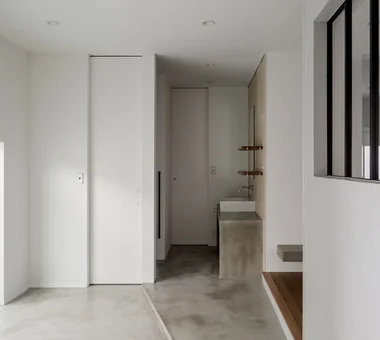
By streamlining the circulation paths from the entrance to each room, daily living becomes more comfortable. Determine the layout by anticipating the family’s lifestyle patterns, such as circulation routes to the living room and the washroom. Additionally, a "shoe cloakroom" that allows passage through the mudroom into the interior is popular as an efficient circulation solution.
Design Quality of Wall Surfaces.
The entrance wall surfaces can be enhanced with accent wallpaper, tiles, or eco-friendly ceramic tiles to create visual interest. Additionally, incorporating niches to display seasonal flowers or decorative items can add vibrancy to the entryway. However, excessive ornamentation may result in a cluttered appearance, so maintaining a balance with simplicity is essential.
Placement and Effects of Mirrors.
Installing a full-length mirror in the entrance area allows for last-minute appearance checks before going out. Additionally, mirrors have the effect of visually expanding the space. By embedding them into the wall surface or using mirrored doors for the shoe closet, a clean and streamlined appearance can be achieved. The location should be chosen so that the mirror is not visible from outside when the entrance door is opened.
Installation of Benches and Seating.
Having benches or seating in the entrance area facilitates putting on and taking off shoes, creating a user-friendly design for elderly individuals and pregnant women. When custom-built benches are installed, the space underneath can also be utilized for storage. Additionally, it serves as a convenient place for guests to set down their belongings.
Considerations for Security.
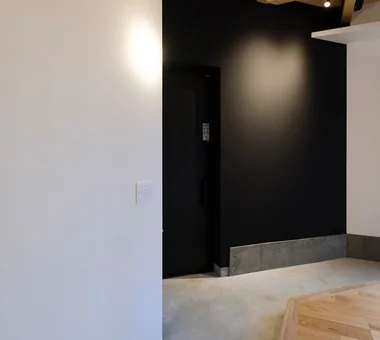
The entrance is the key point of a home's security. Consider adopting features such as dimple keys, electronic locks, and double locking mechanisms. Additionally, having an intercom with recording capabilities allows for monitoring visitors even when absent, providing peace of mind. Installation of security cameras can also be planned as needed.
Connection with the Entire House.
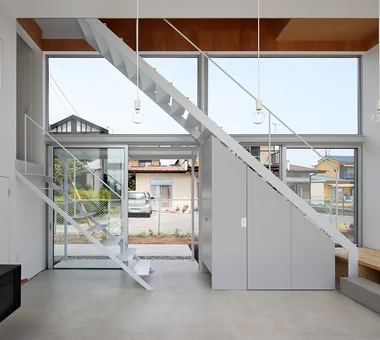
By arranging the layout so that the line of sight extends from the entrance toward the depths of the house, the space can be perceived as larger than its actual size. Positioning the entrance to allow views of a courtyard or inner garden, or to sense the presence of the living room, contributes to a feeling of security upon returning home. Maintaining privacy while providing an appropriate sense of openness is a key element in creating a sophisticated entrance.






 Contemporary Design Residences|Custom-built homes by architecture firms|Expressions of Contemporary Living
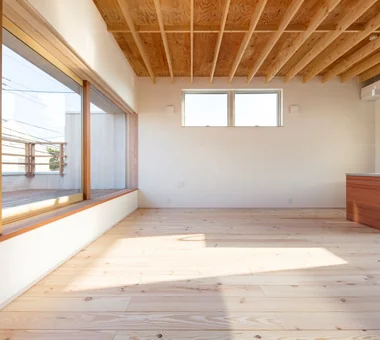 Second-Floor Living|Case Studies|A Home That Embraces Light, Wind, and Scenery for an Open and Airy Lifestyle
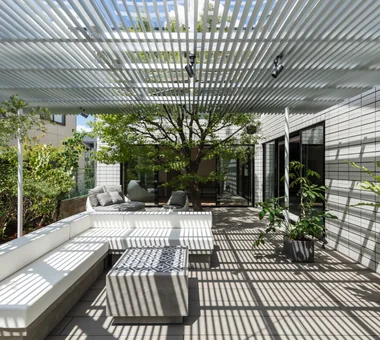 Homes with Gardens|Custom-built homes by architecture firms|A Home That Grows with Greenery
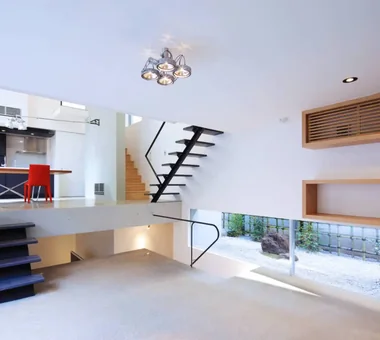 Concrete Houses|Custom-built homes by architecture firms|The Aesthetics of Concrete and Comfortable Residential Environments
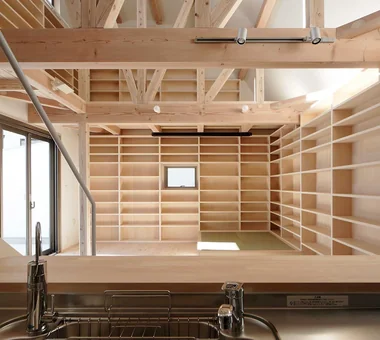 Homes Featuring Wall-Mounted Bookshelves|Custom-built homes by architecture firms|A Residence Surrounded by Books
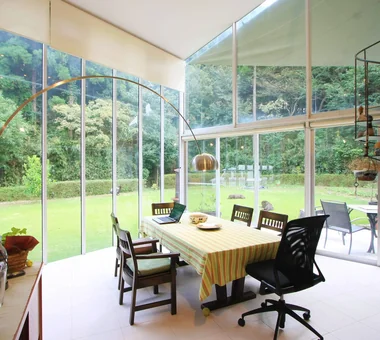 Glass-Enclosed Residences|Case Studies|Balancing Comfort with High-Performance Glazing and Structural Design