Ringo Studio, First-Class Architect's Office
Stylish Hallways|Key Points for Home Building|Key Strategies for Harmonizing Circulation and Spatial Design
Author: Qurasuki Editorial Department
Corridors serve not only as circulation paths connecting individual rooms but also play a crucial role in providing spatial buffering and harmony. Elements such as natural lighting, continuity of flooring materials, and the color and texture of wall surfaces contribute to creating a cohesive and fluid atmosphere throughout the entire residence. By planning with consideration not only for functionality and efficiency but also for the psychological comfort experienced while walking through the corridor, the overall home is unified into a more refined and sophisticated impression.
Setting Appropriate Corridor Widths.
The effective width of corridors is stipulated by the Building Standards Act to be at least 75 cm; however, when considering wheelchair accessibility, a minimum width of 85 cm is recommended. For two-way passage, a width of 1.2 m or more is desirable. Nonetheless, excessively wide corridors may lead to inefficient use of floor area, so decisions should be made taking into account the family composition and potential future changes.
Design Strategies for Daylighting and Spaciousness.
Corridors tend to be enclosed spaces; however, by incorporating windows or connecting them to atriums, they become bright and open areas. Utilizing clerestory windows and skylights allows for natural light penetration while maintaining privacy. Installing doors with glass panels in each room is also effective in enhancing brightness.
Creating Atmosphere Through Lighting Design.
In corridor lighting, it is essential to ensure sufficient brightness for safe passage while creating a soft and inviting ambiance. Combining downlights, wall-mounted bracket lights, and footlights results in a space with beautiful shadows and depth. Incorporating motion sensor-activated lighting enhances safety during nighttime movement and contributes to energy efficiency.
Utilization Methods for Wall Surfaces.
The corridor walls can be utilized as a gallery to display family photographs and artworks. By installing picture rails and illuminating the pieces with spotlights, the artworks can be enjoyed on a daily basis. Additionally, custom-built bookshelves integrated into the wall surface can transform the corridor into a functional reading nook.
Ensuring Adequate Storage Space.
By providing storage adjacent to the corridor, the storage capacity of each room can be supplemented. Plan with a clear purpose in mind, such as linen closets, cleaning supply storage, or seasonal item storage. Matching the door colors and materials with the walls creates a clean and cohesive appearance.
Ventilation and Airflow.
Corridors are areas where air tends to stagnate. Enhancing natural ventilation by opening windows or utilizing corridors as ventilation pathways for a 24-hour mechanical ventilation system improves the overall indoor air quality. Additionally, incorporating undercuts at the bottom of each room's door is an effective strategy to facilitate airflow.
Optimization of Circulation Flow.
The arrangement of corridors directly impacts the efficiency of access to each room. It is important to consider a layout that minimizes corridor area while enabling efficient access to the necessary rooms. Incorporating a continuous circulation flow can also create a user-friendly floor plan without dead ends.
Expressing Spatial Character Through Variations in Width.
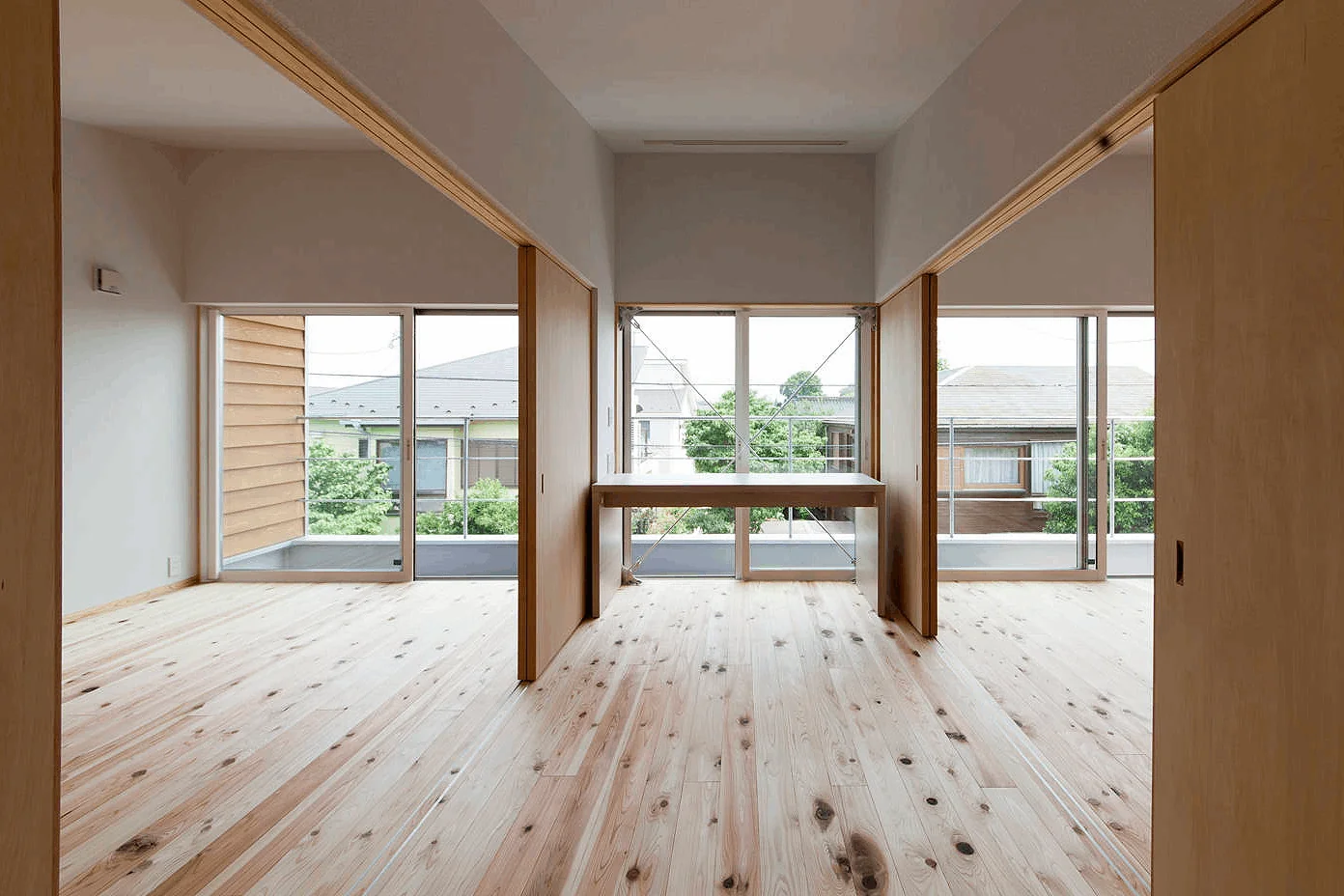
By partially altering the width of a corridor, variations and rhythm are introduced into the space. Expanding areas near room entrances or slightly widening spaces by windows to create small study corners can imbue otherwise monotonous corridors with distinct personality.
Installation of Handrails and Preparation for the Future.
It is recommended to incorporate backing in the corridors to allow for the installation of handrails in preparation for advanced age. If handrails are installed later without backing, reinforcement work on the walls will be required. Currently, it is advisable to keep the design simple and aesthetically focused, while planning so that handrails can be added when needed.
Changing Impressions through Color Planning.
The colors of corridor walls and ceilings significantly influence the spatial impression. Light colors such as white and beige create a sense of spaciousness, while dark tones evoke a calm atmosphere. Using an accent color on a single wall can also prevent monotony.
Handling Sightlines and Visual Terminations.
By installing windows or displaying artworks at the end of corridors, the visual termination points become aesthetically pleasing. In the case of long corridors, arranging elements to change the direction of sightlines midway helps avoid monotony. It is essential to incorporate design strategies that prevent a sense of dead-end confinement.
Reevaluating the Necessity of Corridors.
By minimizing the creation of corridors in the floor plan, it is possible to allocate a larger area to living spaces. Layouts that feature a central living room with a circular flow or arrangements that connect rooms directly without corridors, or with minimal corridors, are worth considering. However, it is also important to take into account issues related to privacy and acoustics.





 Modern Residences|Case Studies|A Form of High-Quality Living Woven from Materials, Light, and Spatial Composition
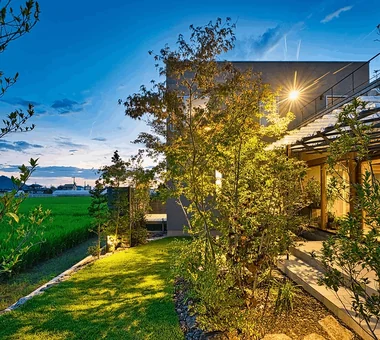 Stylish Gardens|Key Points for Home Building|Landscape Design Emphasizing Connection with Nature
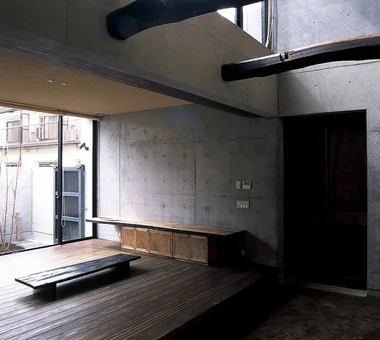 Homes for Antique Enthusiasts|Custom-built homes by architecture firms|A Home That Lives with Timeworn Treasures
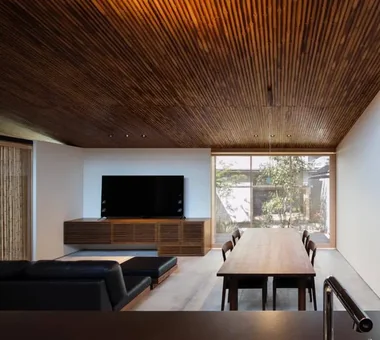 Homes Featuring Courtyards|Case Studies|A Life that Invites Light and Wind, Enjoying the Changing Seasons
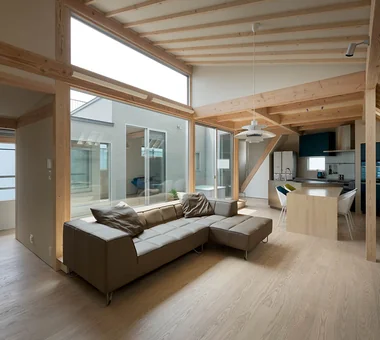 Two-Family House|Introduction to Architecture Firms|Balanced Connections Respecting Each Household's Lifestyle
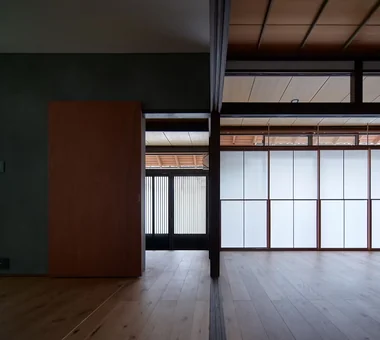 Homes for Antique Enthusiasts|Key Points for Home Building|Harmonizing Architecture and Interior Design through Materiality