Archiplace
Homes Designed for Living with Cats|Home Building Q&A
Author: Qurasuki Editorial Department
In cat-friendly homes, residences must be designed by incorporating feline movement, resting, and observation habits alongside human usability. Activity levels vary by age and personality, with some cats favoring heights while others prefer quiet zones. Living approaches shift based on continuous shared family spaces versus independent distance zones. Personal considerations vary regarding cleaning, scratching, shedding, and litter maintenance burdens. Anticipating future aging or multi-cat possibilities, we organize questions common in cat-friendly homes.
What home features can be incorporated for cats to enjoy vertical movement in a house shared with felines?
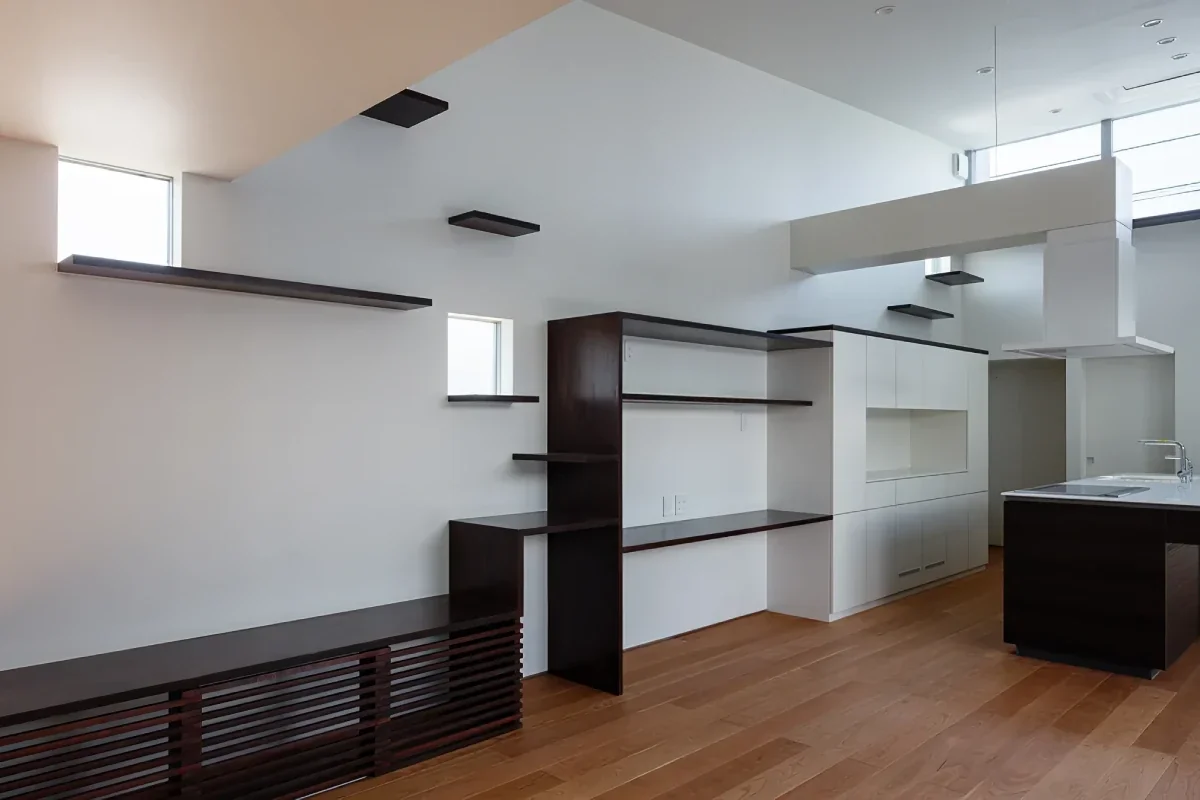
Because cats prefer high places and possess habits of active vertical movement, one method is to install cat walks and steps on wall surfaces so the interior can be utilized in three dimensions. When utilizing existing structures such as beams and columns, it is essential to verify structural and backing conditions and properly secure them so they can withstand a cat's weight and motion. If you wish to change the layout in the future, combining built-in millwork with movable cat towers is another approach.
What design considerations allow a floor plan where cats can move freely throughout the rooms?
Incorporating dedicated cat doors into the doors of each room allows felines to move about even when human doors are closed. Providing cat-exclusive pathways in the upper portions of hallways and rooms creates routes for cats to navigate the interior independently of human circulation. A circulation-friendly traffic flow that enables movement across multiple locations is one design strategy that increases opportunities for cats to explore and exercise indoors.
What measures protect walls and furniture from a cat's scratching habits?
Rather than forcefully suppressing a cat's instinct to scratch, the fundamental approach is to provide dedicated locations and use materials resilient to damage. Methods include installing scratching boards or hemp materials on portions of walls, or choosing wall finishes that are scratch-resistant and easy to clean. Because preferred locations and materials vary by cat, observing their daily habits and placing scratching spots near frequented areas enhances usability.
Where should a cat's toilet space be positioned?
To ensure cats can eliminate calmly, it is important to choose locations that are not overly congested with human traffic and are easy to clean and ventilate. When establishing dedicated spaces within corners of washrooms or storage areas, ensure easy entry and exit for the cat while also addressing ventilation to prevent odors and humidity from trapping. In multi-cat households, considering inter-cat relationships regarding the number and placement of litter boxes—distributing them across multiple locations—improves usability.
How should entryways and windows be planned to prevent feline escapes?
At the entryway, one method is to install an additional door or gate between the foyer and the interior to prevent cats from darting directly outside when the main door is opened. Regarding windows, assuming they will be opened for ventilation, consider escape-prevention equipment suited to window shapes and the cat's physical size to prevent them from pushing through or slipping out. For windows connected to balconies or verandas, prioritizing safety—such as establishing double-prevention measures rather than assuming free outdoor access for the cat—is crucial.
How should window locations be planned so cats can enjoy sunbathing?
Installing counters or shelves by windows allows cats to gaze at outdoor scenery and sunbathe, creating a favorite retreat. Crafting locations where the height and orientation of windows frame outdoor views is also effective. On the other hand, to prevent indoor temperatures from rising excessively due to solar radiation in summer, providing curtains or blinds to adjust sunlight offers peace of mind. For window perches, attention must also be paid to fixing methods so they neither detach nor tip over when a cat leaps onto them.
What points require attention when selecting flooring materials for a home shared with cats?
Considering that cats run and leap, it is important to select flooring materials that are slip-resistant and mindful of scratches and stains. Slippery floors can place stress on a cat's paws and lower back, so check surface textures and finishes before choosing. Water resistance and ease of maintenance are also vital for easy cleanup in the event of vomiting or accidents. Beyond flooring materials, combining surface coatings or rugs allows you to establish an environment where both cats and humans spend time comfortably.
How should the ventilation plan be approached as a countermeasure against feline odors?
The key is to anticipate locations prone to odors—such as cat toilets and feeding spaces—in advance and position them in easily ventilated zones. In addition to localized ventilation equipment, ensuring 24-hour ventilation functions properly throughout the entire dwelling is essential. While building materials claiming deodorizing and humidity-regulating properties exist, rather than relying solely on them, anchoring your strategy in ventilation and cleaning is advisable. Planning the toilet area comprehensively alongside storage and circulation paths makes cleaning and litter replacement effortless.
What considerations are necessary in home design when living with multiple cats?
In multi-cat households, it is important to provide multiple resting spots so cats do not feel forced to gather in the exact same location at all times. It is wise to plan toilets, feeding stations, and water bowls so they can be dispersed according to inter-cat dynamics and lifestyle patterns. Regarding cat walks, avoiding concentration into a single route by creating multiple travel paths and elevation-staggered resting spots helps cats maintain appropriate social distances from one another.
Are there precautions regarding toxic plants or materials in a home shared with cats?
Because certain plants can cause poisoning if ingested by cats, it is vital to verify safety concerning felines before selecting plants for indoors or the garden. Regarding building materials—while standards are not exclusively feline-focused—choosing materials mindful of indoor air quality and formaldehyde emission levels provides peace of mind. Furthermore, items that cats might accidentally ingest or knock over, such as cords, small objects, and detergents, should be stored out of reach, encompassing safety measures beyond building materials alone.
What considerations can be made for visiting guests in a home shared with cats?
Because some cats dislike visitors, providing a quiet space within the home slightly removed from people offers reassurance. Methods include establishing high-perched cat walks, furniture alcoves, or dedicated small spaces where cats can choose to hide independently. If visitor circulation paths and feline living pathways are gently separated, cats can maintain distance as needed. Designing escape havens paired with safety measures to prevent accidental outdoor escapes is equally important.
How can ventilation and escape prevention be balanced for windows in a feline-friendly home?
In homes shared with cats, it is important to consider preventative measures window by window so escape is prevented even when windows are opened for ventilation. Select equipment suited to window types and feline physique, such as escape-prevention nets, grilles, or stoppers limiting window opening widths. Because standard insect screens can be pushed out or torn by cats, relying solely on screens for escape prevention should be avoided for peace of mind. Planning through to the frequency of window opening and ease of cleaning/maintenance results in a dwelling that remains user-friendly in daily life.
I am concerned whether cat footfalls and noises will echo to lower floors or neighboring homes. Are there countermeasures?
Although cats are relatively lightweight, leaping down from high places can transmit impact to the floor. Particularly in multi-family housing, considering measures matching building structures—such as adopting specifications with vibration-damping and sound-insulating performance beneath flooring materials—is advisable. Another method is placing mats at landing points from cat walks to cushion impact upon landing. In multi-family dwellings, management bylaws or operational rules may specify conditions regarding flooring materials and pet ownership, so verify these prior to renovation.
What can be prepared in home design anticipating when cats reach advanced age?
Even if young felines enjoy climbing up and down high places, motor abilities can shift as they age. Consequently, providing resting spots at floor level as well as high places offers peace of mind. Non-slip flooring and circulation paths with minimized steps lead to environments easily navigated by older cats. Incorporating low steps midway along cat walks to reduce future climbing strain is another effective strategy.
What is important to communicate at the initial design stage when building a home shared with cats?
It is crucial to specifically communicate daily lifestyle patterns, including the number of cats, their ages, personalities, activity levels, scratching, and toilet habits. Sharing desired elements for feline co-living early on—such as cat walks, window perches, escape prevention, scratching posts, and toilets—makes it easier to reflect them in floor plans, materials, and equipment. Rather than catering solely to feline instincts, considering ease of cleaning, maintenance, and balance with human traffic circulation creates a home where both cats and humans live comfortably.



 House with a Natural Woodland Garden|Key Points for Home Building
 A Home for Living with Antiques|Introduction to Examples by Floor Plan & Room Type
 House of Wood|Home Building Q&A
 Stylish Atriums|Key Points for Home Building
 Stylish Staircases|Home Building Q&A
 House with a Wood Deck|Home Building Q&A