Archiplace
Stylish Children's Rooms|Key Points for Home Building|Flexible Spaces Adaptable to Growth
Author: Qurasuki Editorial Department
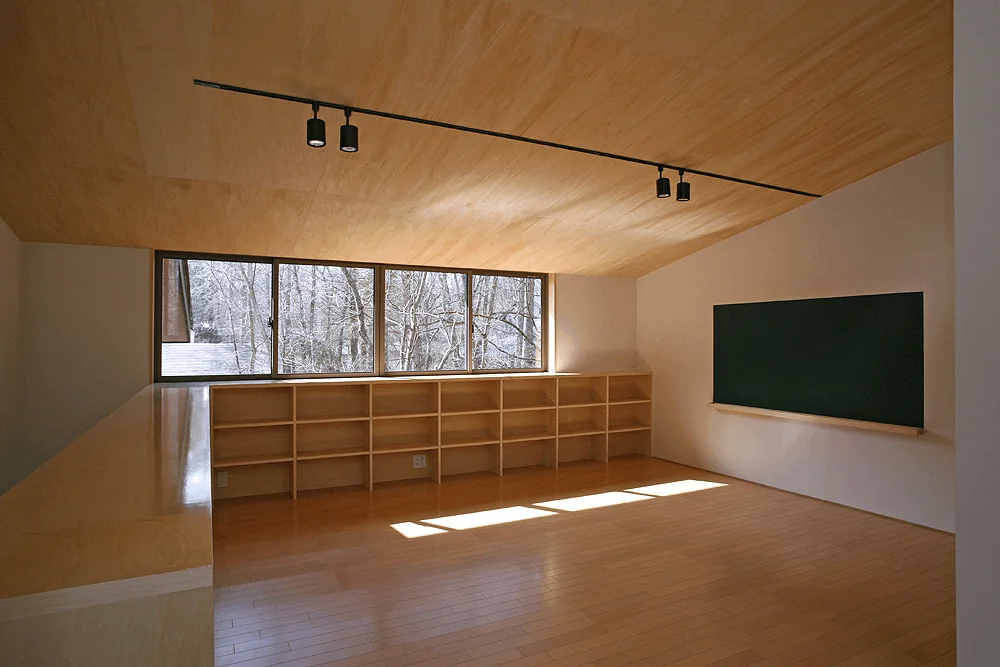
Children's rooms are spaces that require flexibility as their functions change with growth. An ideal design anticipates not only current needs but also future transformations. While ensuring fundamental environmental factors such as natural lighting and ventilation, creating spatial qualities that enable children to concentrate or enjoy time with friends fosters the development of independence and individuality.
Spatial Planning with Future Growth in Mind.
It is essential to determine the size of children's rooms based on anticipated future uses. While 4.5 to 6 tatami mats is typical, the space must accommodate a study desk, bed, storage, and play area. One approach is to utilize a larger open space during early childhood and partition it with furniture as the child grows. When siblings share a room, it is advisable to consider a layout that allows for future division.
Flexible Floor Plan.
A flexible design is effective, assuming that the usage will change according to the growth of children. Initially, the space is used as a large single room, and upon reaching adolescence, it can be divided into two rooms with partitions by thoughtfully arranging doors, storage, and windows. Installing backing for partition walls in advance facilitates easier renovations later.
Storage Planning and Ease of Tidying
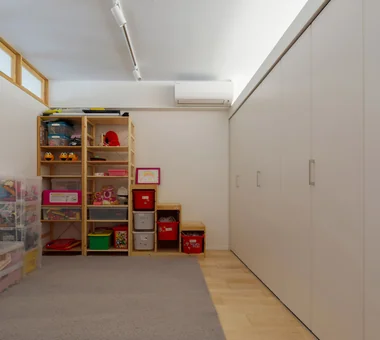
Children's belongings, such as toys, books, clothing, and school supplies, change as they grow. By utilizing adjustable shelves and open storage, the way storage is used can be adapted according to their development. Considering heights and systems that make it easy for children to tidy up by themselves also fosters habits of organization and cleanliness.
Lighting Design and Consideration for the Eyes.
The lighting in the children's room fundamentally combines a main light that illuminates the entire space brightly with a desk light for study purposes. If a dimming function is available, the brightness can be lowered before bedtime to create a relaxing atmosphere. Eye-friendly LEDs are long-lasting and economical.
Selection of Wallpaper and Color Schemes.
The color scheme of a children's room should create a bright and cheerful atmosphere while also providing an environment conducive to focused study. Excessive use of primary colors can be overly stimulating; therefore, consider balancing the palette by applying accent colors to only one wall. Choosing subdued tones that remain suitable as the child grows is also a viable approach.
Selection of Flooring Materials and Playability
Since young children often play on the floor, it is advisable to use soft and warm flooring materials. Cork tiles and carpets provide cushioning to prevent injury from falls and also offer sound insulation. In the case of hardwood flooring, the use of rugs or mats can address these concerns. It is also important to consider ease of cleaning for future stages of growth.
Ensuring Safety.
It is essential to incorporate safety measures such as installing fall-prevention guards and opening restrictions on windows, fitting covers on electrical outlets, and avoiding furniture with sharp corners. While these precautions may become unnecessary as children grow, special attention is required during their early years.
Connecting with Family.
Instead of making the children's rooms completely independent, positioning them close to the living area creates an environment where the presence of family can be felt. On the other hand, privacy becomes important during adolescence, so it is essential to plan with a balanced approach, including the placement of doors.
Location and Number of Electrical Outlets
Multiple electrical outlets are required around the study desk area to accommodate lighting, computers, tablet charging, and other devices. As the types of electrical appliances used will change with growth, it is practical to install a sufficient number of outlets with some margin. The height of the outlets should also be planned in accordance with the desk position.
Innovative Display Space Design
Having a dedicated space to showcase children's artwork, certificates, and favorite posters fosters a sense of attachment to the room. Incorporating picture rails, magnetic boards, or cork boards allows for flexible and creative display options. As the occupant grows, the items displayed will change, so a system with adaptability and variability is ideal.
The Role of the Children's Room.
An increasing number of families have children studying in the dining or living areas. Therefore, it is advisable not to rigidly define the children's room solely as a "study space," but rather to consider it as a personal area where children can organize their belongings, spend quiet time alone, or play with friends.
Repurposing After Children Leave the Nest.
Planning for how rooms will be used after children become independent leads to a more efficient and sustainable floor plan over the long term. Designing spaces to be simple and highly versatile allows them to be adapted for various functions such as a study, hobby room, or guest room, which is a strategic approach to maximize utility.




 Forever Home|Introduction to Architecture Firms|A Home for Enriching Life's Later Years
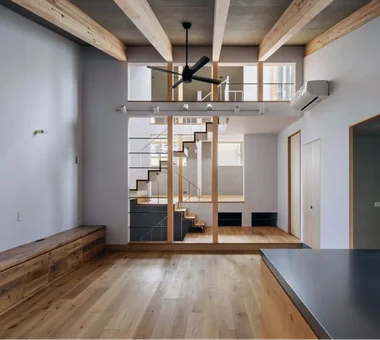 Homes Embracing Natural Light|Case Studies|How the Day's Light Shapes Your Life: Creating Rich Expressions of Natural Light Through Orientation, Materials, and Openings
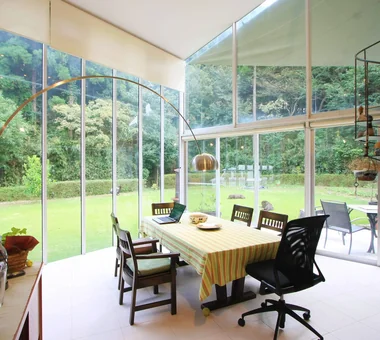 Glass-Enclosed Residences|Case Studies|Balancing Comfort with High-Performance Glazing and Structural Design
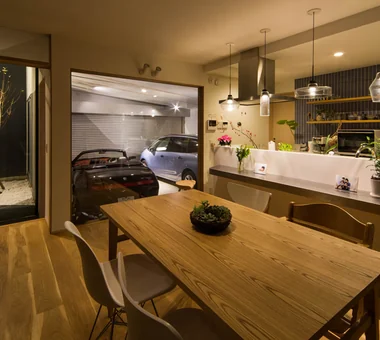 Garage Houses|Key Points for Home Building|Garage Design for the Elegant Storage of a Beloved Car
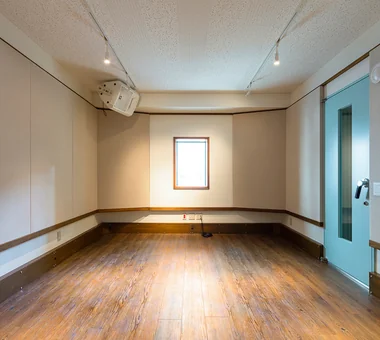 Homes Featuring Soundproof Rooms|Custom-built homes by architecture firms|A Home for Free Musical Expression
 Compact House|Custom-built homes by architecture firms|Living Abundantly in Compact Homes