Mochizuki Architectural Atelier
Garage Houses|Custom-built homes by architecture firms8Picks|A Home for Living with Your Beloved Car
Author: Qurasuki Editorial Department
For those who regard their automobile not merely as a means of transport but as an object to be viewed, maintained, and cherished in daily life, a garage house represents a transformative housing typology. The design of an inner garage requires specialist consideration of exhaust ventilation strategies, floor finishes, the means of connection to habitable spaces, fire compartmentation and compliance, and circulation planning for storing multiple vehicles, among other technical issues. Architectural practices undertake detailed interviews regarding vehicle types and quantities, maintenance habits, and how clients wish to spend time in the garage, and from that develop garage-house designs in which car and domestic life are naturally integrated. This text introduces case studies of residences that enable a fulfilling daily life alongside one’s car.

Garage House of Slanted Light
Yosuke Tomiya Architectural Design Co., Ltd.
A garage house on a sloping site in Sapporo. Site conditions and regulations were treated as design conditions rather than constraints, and the dwelling was assembled from sectional planning. A hybrid structure with an RC basement and timber 1st–2nd floors rationally arranges garage, storage and living spaces; the 2nd-floor double-height void and stairwell softly convey natural light from above down to the 1st-floor LDK. Large east-facing openings expand views, and the interior features the texture of wood, such as solid timber and todomatsu tongue-and-groove boarding. A residence that turned limited conditions into architectural appeal.
House of Trajectories
Far East Design Lab.
Approximately one hour from Tokyo, this residence is situated on a generous, verdant suburban site. Designed by a German–Japanese couple as their new home for the post‑retirement phase, the project integrates the garden and house while preserving existing mature trees so that each window frames a distinct view. The main house is a simple single‑story pavilion that opens broadly to the garden; deep eaves and a terrace create a gentle transition between interior and exterior. The program also includes a dedicated garage for restoring classic BMWs, providing a base for hobbies and social exchange.
Garage House Featuring a Skip-Floor Design
JYU ARCHITECT
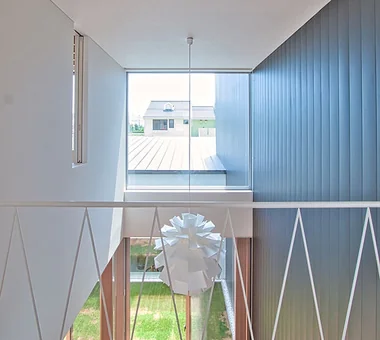
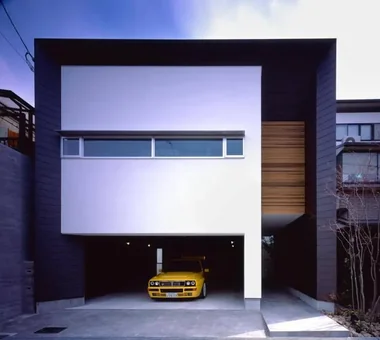
This is a garage house built on a corner lot of approximately 30 tsubo. By employing a split-level configuration that takes advantage of the site’s level changes, the design mitigates moisture while creating a variety of comfortable living areas. It accommodates the pleasures of daily life with a bright built-in garage, a living room with a sloped ceiling, a dining area overlooking a specimen/symbol tree, an all‑stainless steel kitchen, a large-capacity pantry, and dedicated spaces such as a sewing studio and storage for road bikes. The dwelling also features high thermal insulation performance and a seismic damping structure, combining provision for hobbies with comfort and peace of mind.
Garage House by the Kizugawa River
In-Ex Design Co., Ltd.
This house was conceived from a site condition with an approximate 1.2 m level change and the owner's passion for cars and motorcycles. The approach from street level gently guides you toward the courtyard while offering views of the garage; beyond it, the living spaces unfold in a striking composition. The courtyard, positioned between the garage and the living/dining/kitchen (LDK), blurs the boundary between interior and exterior and expands the stage for daily life. The interior is unified in achromatic tones except for the texture of wood, providing a backdrop that accentuates the presence of cherished belongings. It is a residence filled with abundant living spaces in which both inside and outside are fully and deliberately inhabited.
COCHE — Residence with an Integrated Garage for the Beloved Vehicle
YIA Ishiue Yoshihiro Architectural Design Office
Situated on a rectangular site in Naruto, Tokushima Prefecture, the residence fronts a 6.0 m wide road to the south and places a built-in garage for car and bicycle storage toward the street. While the garage roof affords views of fireworks, the street-facing presence is softened by arranging front-to-back volumes of differing heights and by composing a black exterior skin with white interior surfaces. An interior courtyard is inserted to secure a flat sequence of movement—street → garage → courtyard → living room → bedroom—while a projecting portion facing the street contains a tatami alcove and a loft.
House in Higashitezukayama
Kumi Inoue Architects
A residence conceived for a neighborhood characterized by rows of older houses. The building is organized into two volumes of differing scale: a lower volume oriented toward the street and a taller volume positioned toward the rear of the site, thereby moderating the building’s presence and reducing any sense of enclosure along the streetscape. A courtyard placed between the two masses, together with a landscaped approach that extends inward from the street, draws greenery into the public realm and gently links the dwelling with the surrounding community. The project introduces renewed spaciousness and amenity to the streetscape.
House Overlooking the Garage
Mochizuki Architectural Atelier
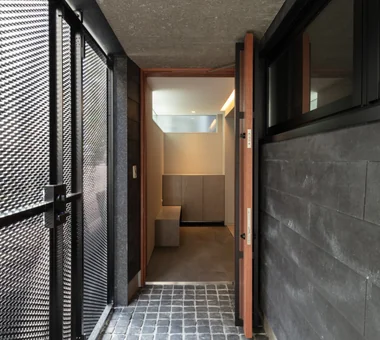
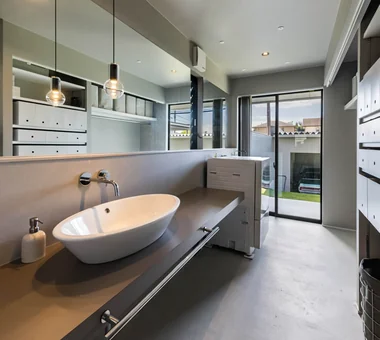
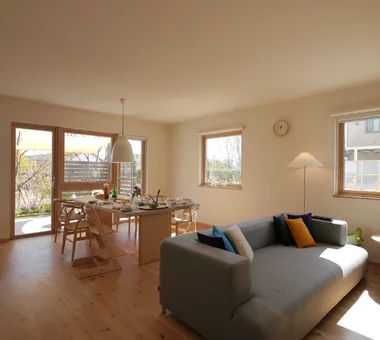
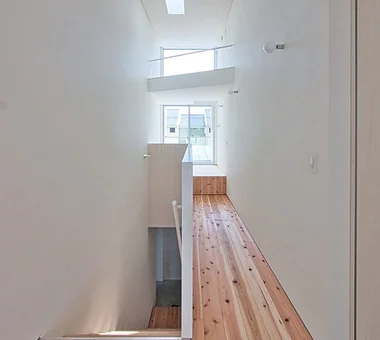
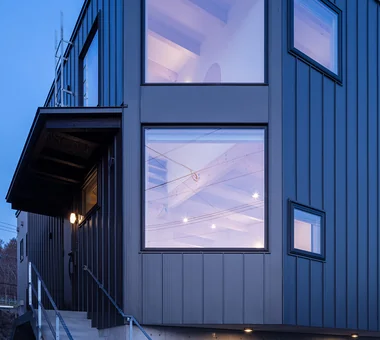
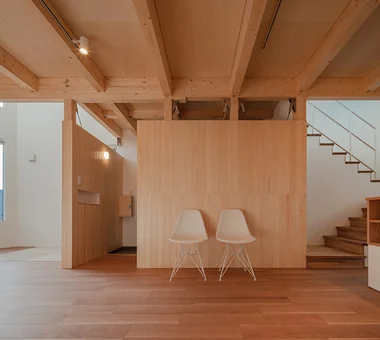
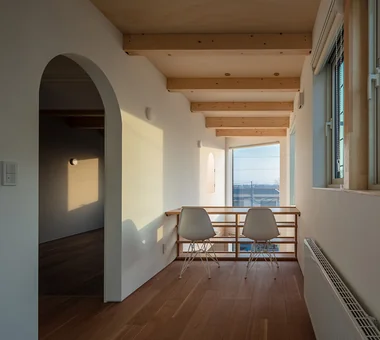
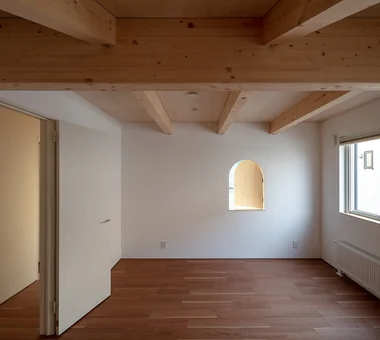
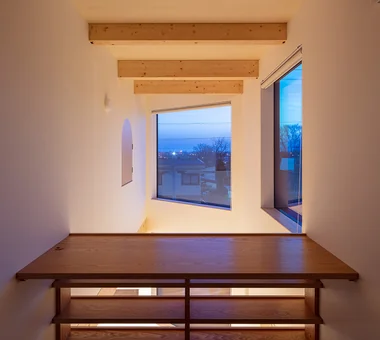
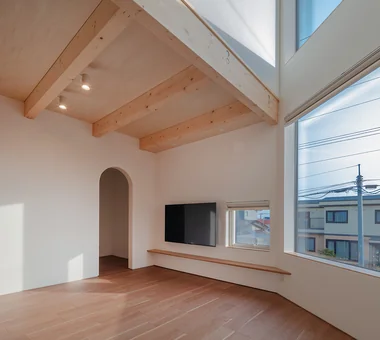
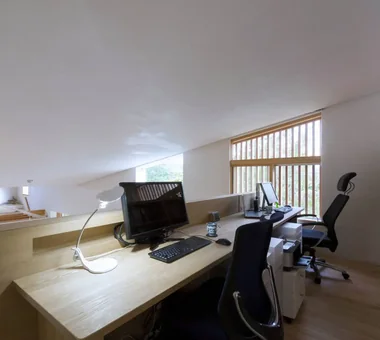
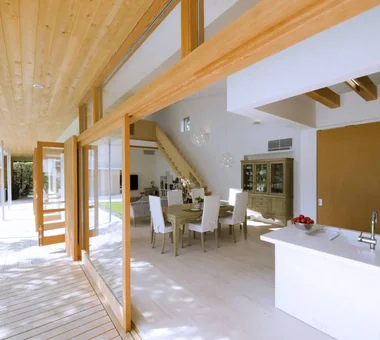
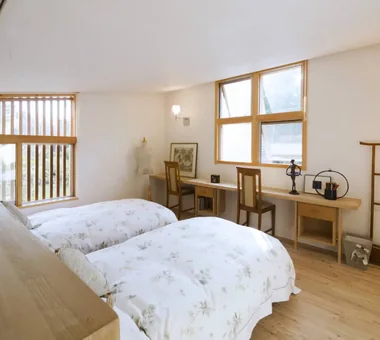
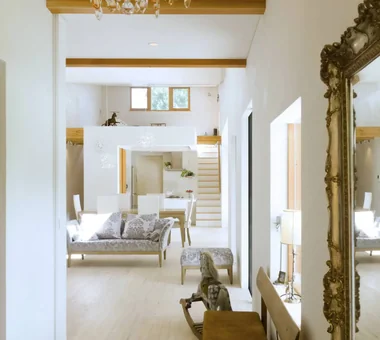
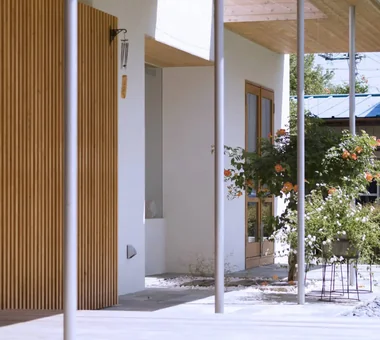
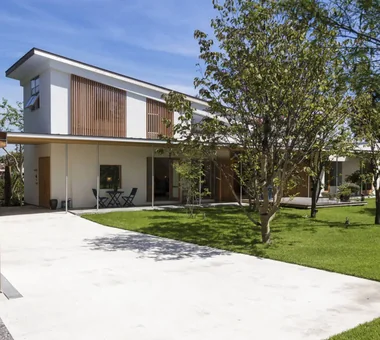
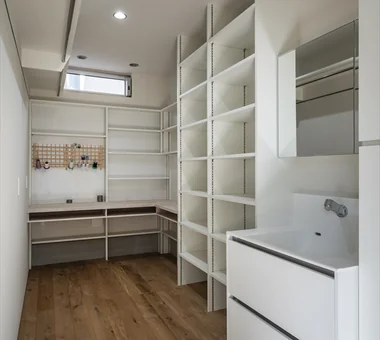
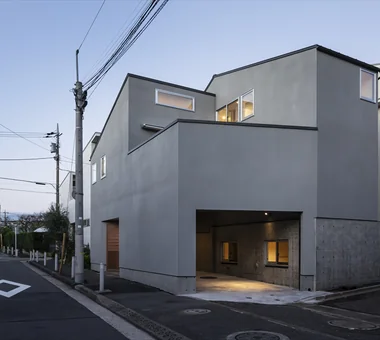
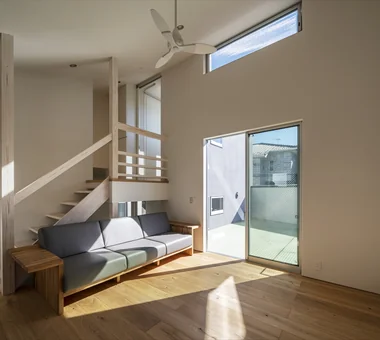
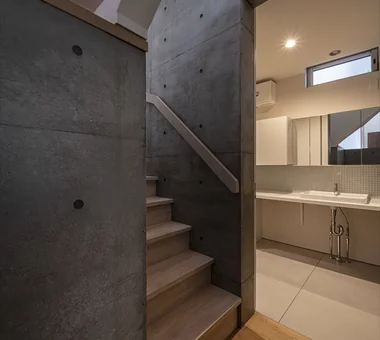
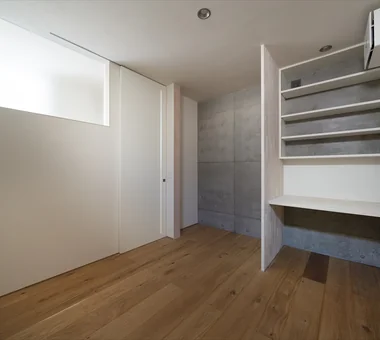
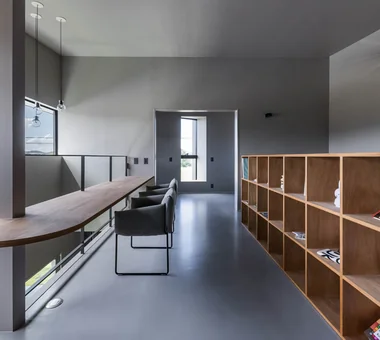
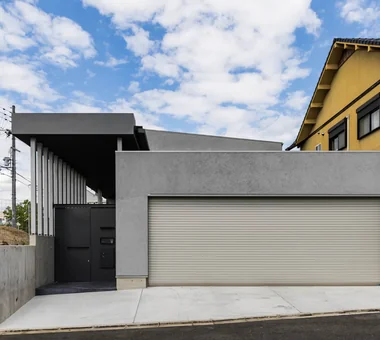
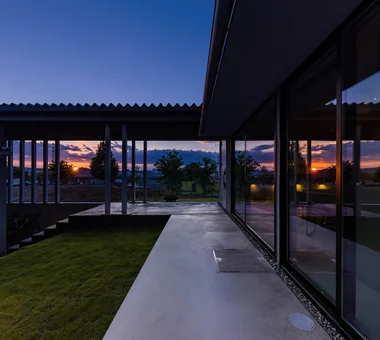
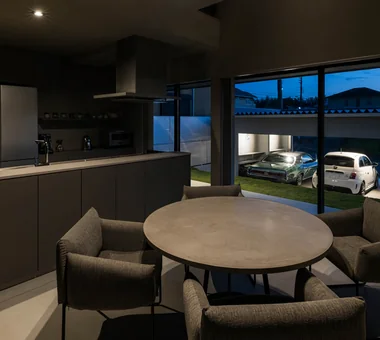
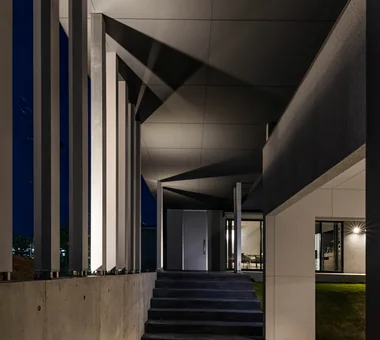
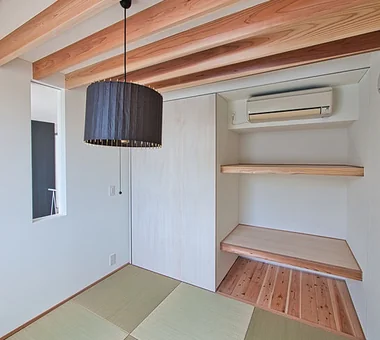
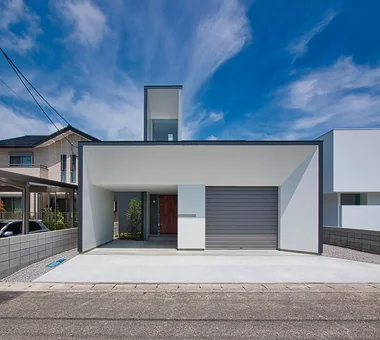
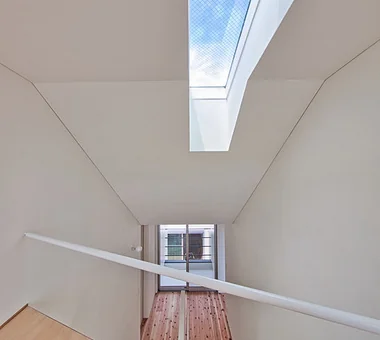
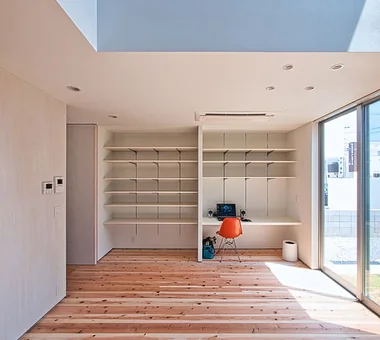
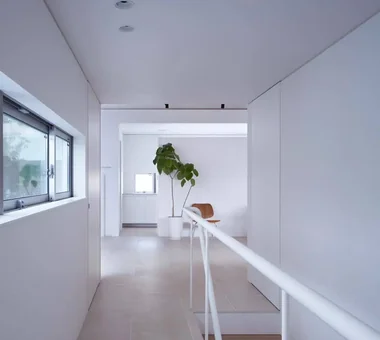
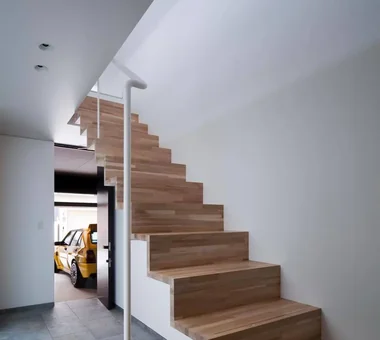
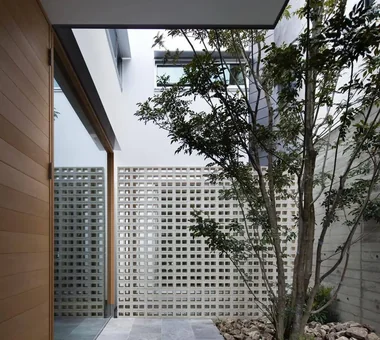
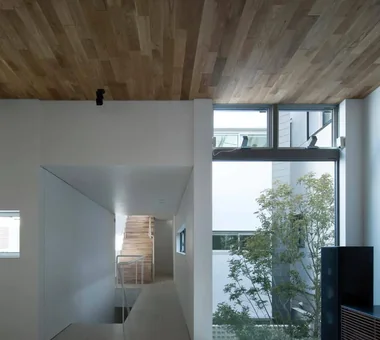
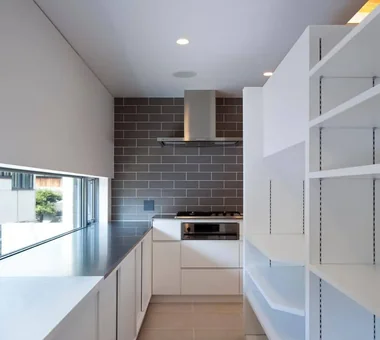
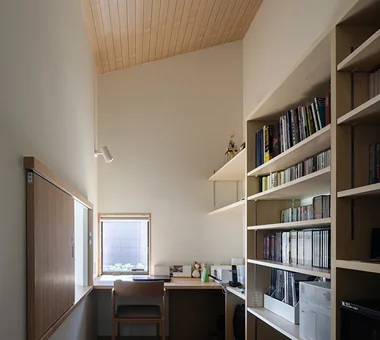
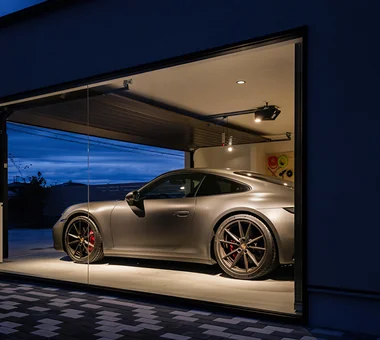
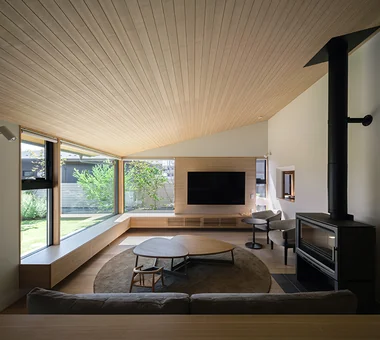
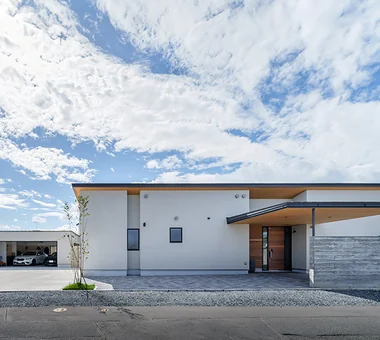
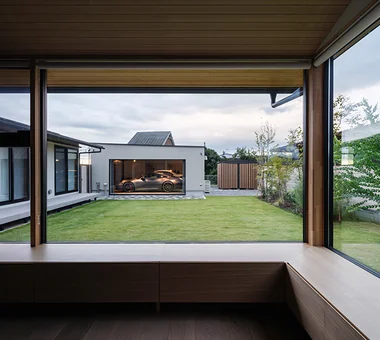
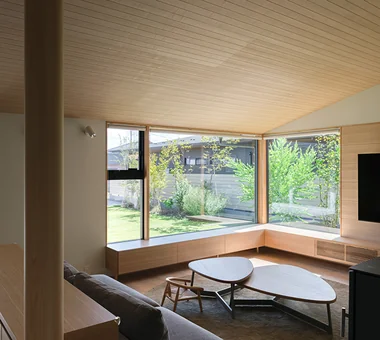
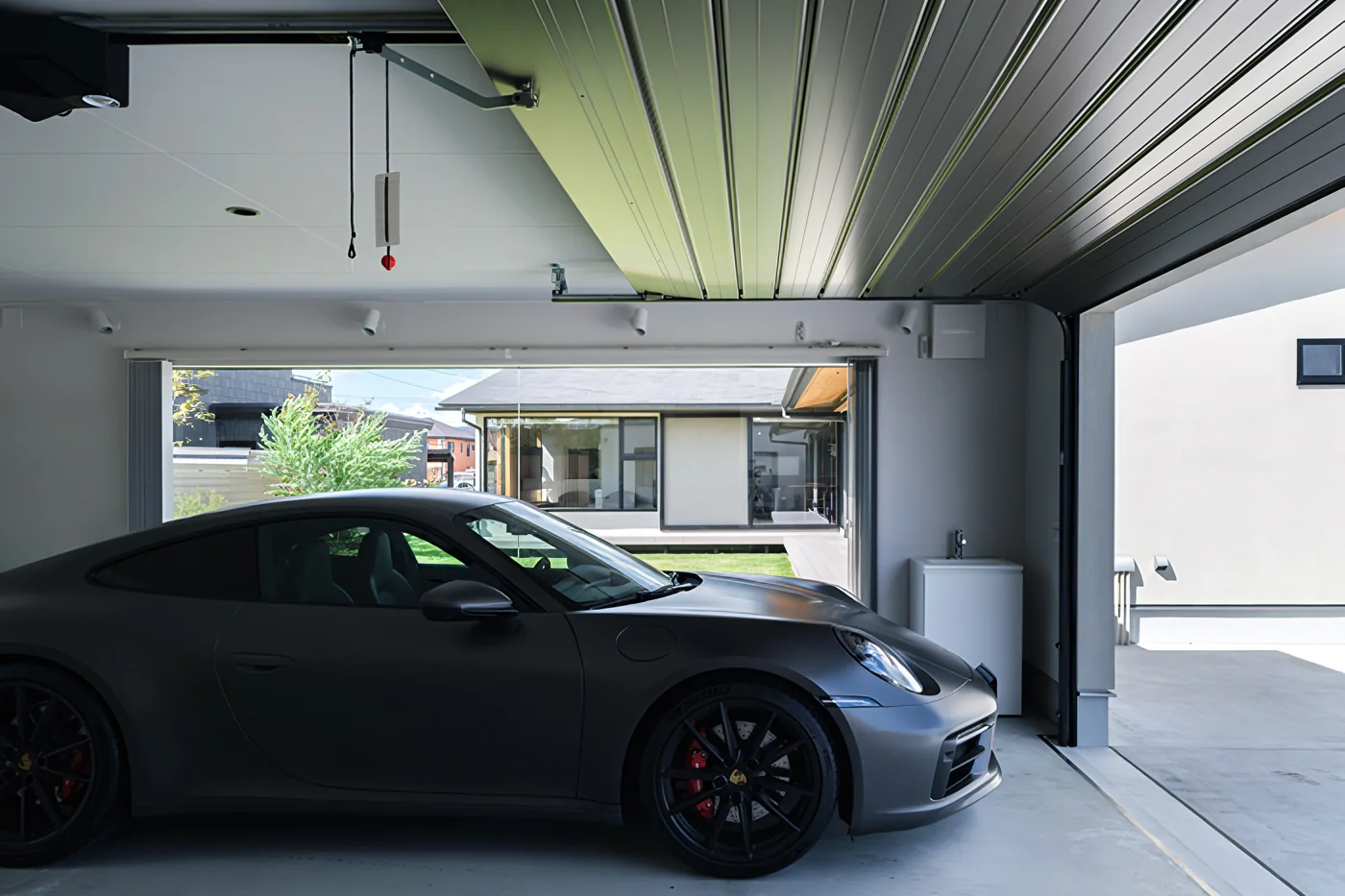
A single‑storey residence that maximizes the generous, nature‑rich suburban site. Because the locality allows a standalone garage, the parking is arranged as a detached outbuilding. The plan orients the living room and study to face the garage across the garden, and an L‑shaped building form creates a courtyard to ensure privacy. The exterior is expressed as a simple, streamlined composition beneath a mono‑pitched roof, while the interior features sloped ceilings and timber‑based finishes.
House in Fukushima
Abax Architects
An urban residence located in Fukushima Ward, Osaka City. With a narrow street frontage and being surrounded on three sides by high-rise buildings, the site presented a severe environment, so a home equipped with a residential elevator was planned as a "final dwelling." The project initially began as a renovation study but was converted to new construction due to issues with the certificate of inspection/completion. KMEW's Solido was adopted for the exterior walls, placing emphasis on a materiality that can be enjoyed as it ages. Phosphate-treated steel plates were used for the balcony copings and the eave-edge trim, achieving a consistent, urban exterior down to the details.
-
House with a Doma|Introduction to Architecture Firms|A Rich Transitional Space Connecting Interior and Exterior2026-05-11|Qurasuki Editorial Department -
Stylish Staircases|Key Points for Home Building|Design Innovations for Vertical Spaces Combining Safety and Aesthetics2025-10-20|Qurasuki Editorial Department -
Homes Featuring Traditional Tea Rooms|Introduction to Architecture Firms|Embedding the Extraordinary Within Everyday Life2026-06-24|Qurasuki Editorial Department -
Homes Featuring Wall-Mounted Bookshelves|Introduction to Architecture Firms|Spaces for Living with Books2026-05-11|Qurasuki Editorial Department -
Homes with Scenic Views|Introduction to Architecture Firms|Techniques for Integrating Views into the Home2026-05-11|Qurasuki Editorial Department -
Doma Living|Custom-built homes by architecture firms|A Generous Doma at the Center of Daily Life2026-05-13|Qurasuki Editorial Department