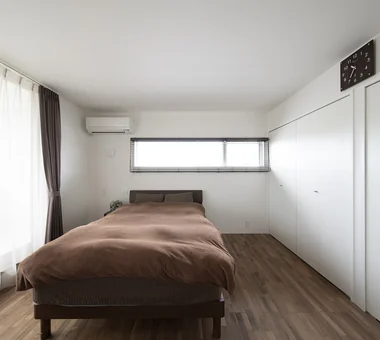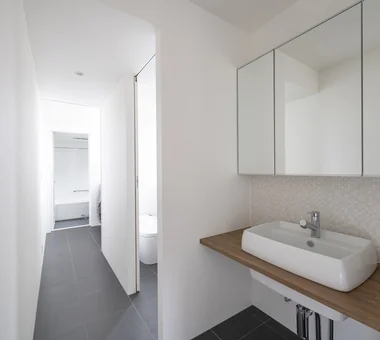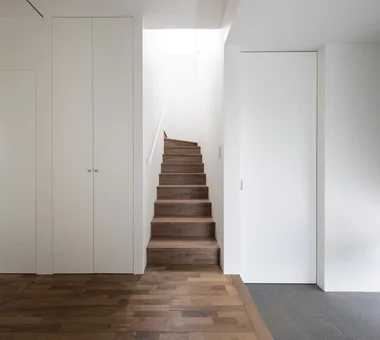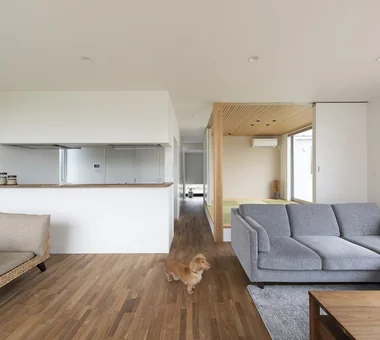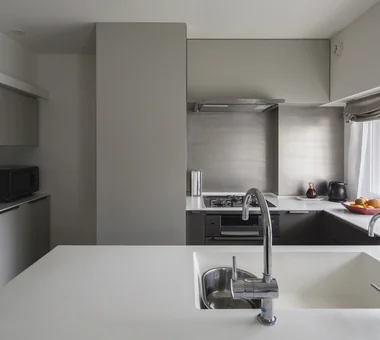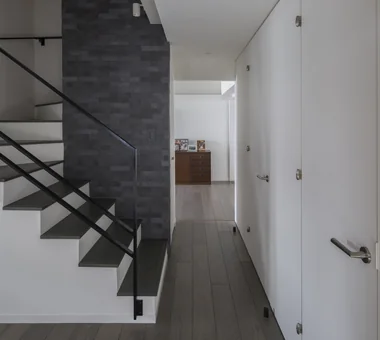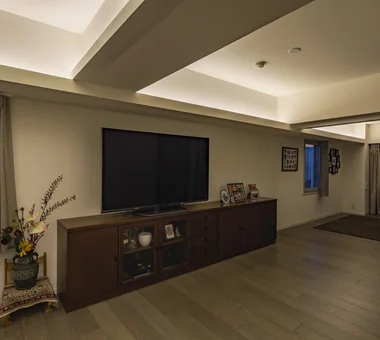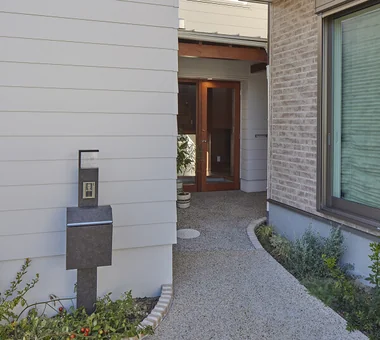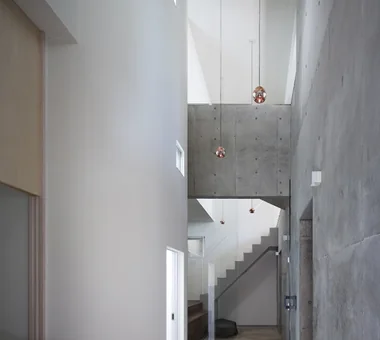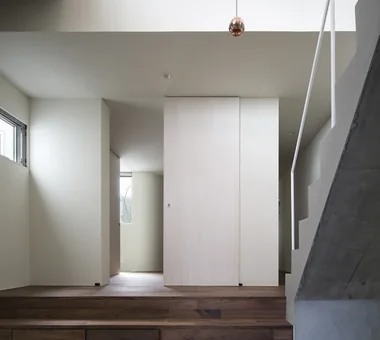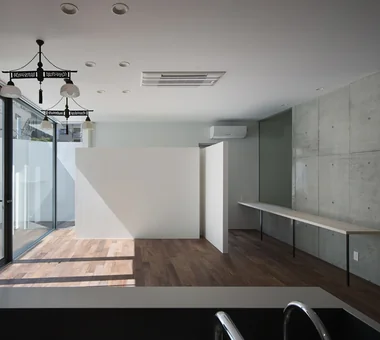
Kumi Inoue Architects
Modern Residences|Custom-built homes by architecture firms9Picks|An Honest Expression of Contemporary Architecture
Author: Qurasuki Editorial Department
The term "modern" admits a range of interpretations, but in residential architecture common characteristics include restrained, lucid forms, the integration of function and aesthetics, and an honest expression of structure. Designs that emphasize horizontal lines, orderly generous openings, and flat decks that connect interior and exterior impart a sense of openness and a refined presence to the home. The architectural practice, while responding to site conditions and the client’s lifestyle, seeks to express the essential beauty of modern architecture in forms rooted in contemporary living. We present examples of modern residences that are not bound by trends and that can be lived in with lasting attachment.

A Second Home in Yatsugatake
Tatsumi Negishi Architectural Studio
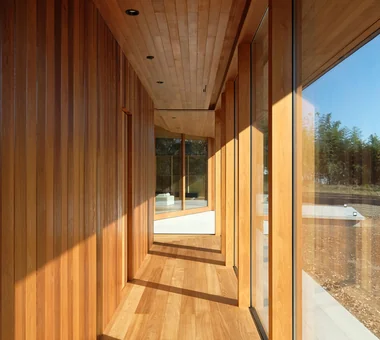
This is a mountain lodge for nature and creative work, built at an elevation of 1,600 m in the Yatsugatake Mountains. To respond to the severe conditions—winters that can reach minus 20°C—a hipped roof with deep eaves was adopted, giving the building a presence that gently blends into the expansive natural landscape. To accommodate mountain living with mud, snow, and water, a circulation layout centered on storage was planned, allowing movement to circulate around storage areas. By opening and closing the joinery, the plan can be flexibly reconfigured into a windbreak/vestibule or a guest circulation route. The space, where functionality and comfort have been carefully refined, serves as a quiet base for engaging in creative work while enjoying the seasonal changes in nature.
House OTF
Far East Design Lab.
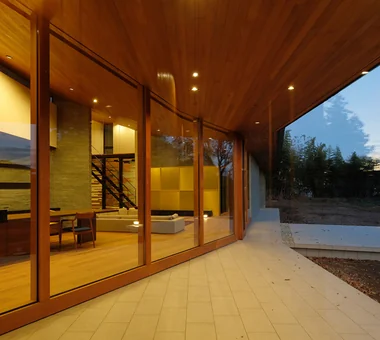
A residence planned for a couple raising three daughters. Drawing on memories of their annual summer holidays in Okinawa, the design seeks to enable the family to enjoy extended summers together. The site incorporates a swimming pool and outdoor living areas, bringing the ambience of a southern‑island villa into everyday life. Through the deliberate arrangement of deep eaves and fenestration, the spaces remain comfortable in summer by providing shade and promoting natural breezes. The house is conceived as a place to accumulate time with the children and seasonal memories.
HE10 — AICA Project Example Contest, Excellence Award
YIA Ishiue Yoshihiro Architectural Design Office
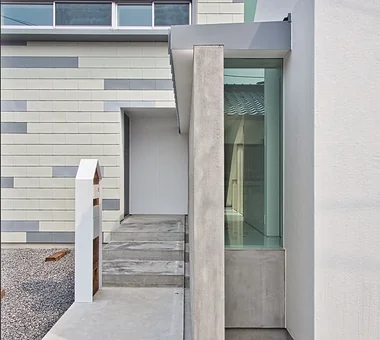
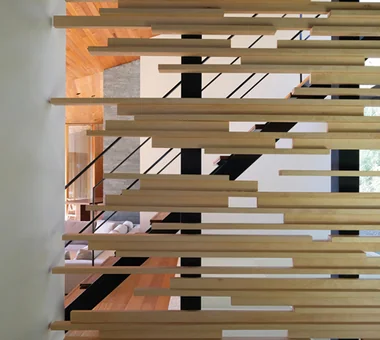
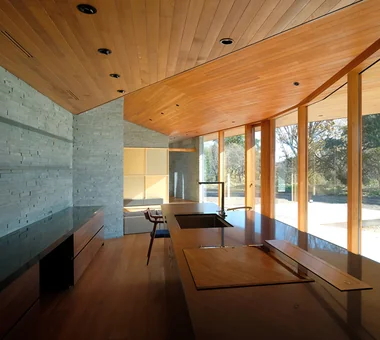
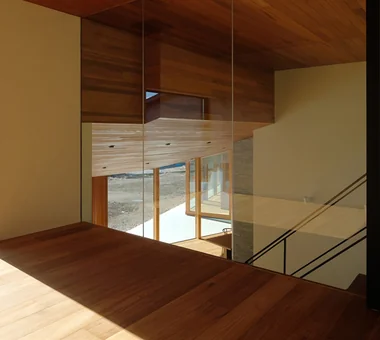
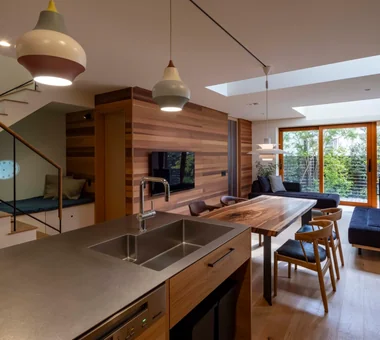
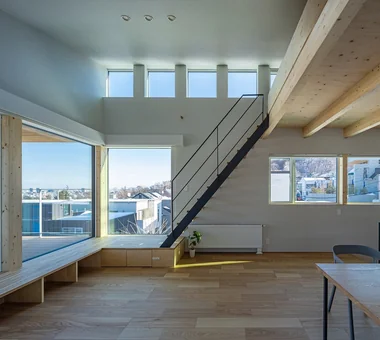
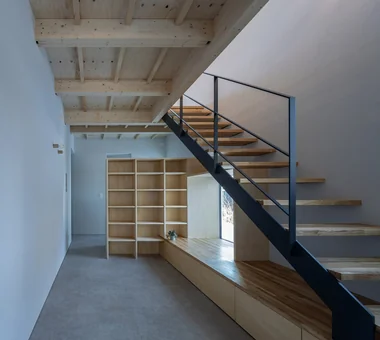
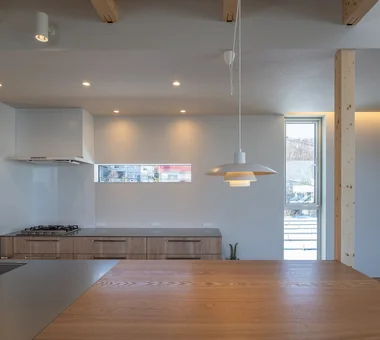
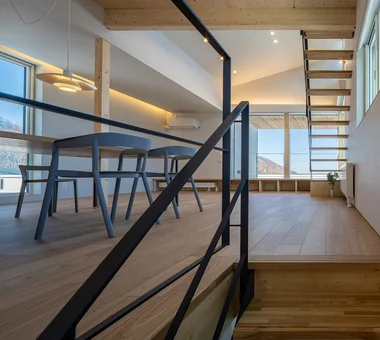
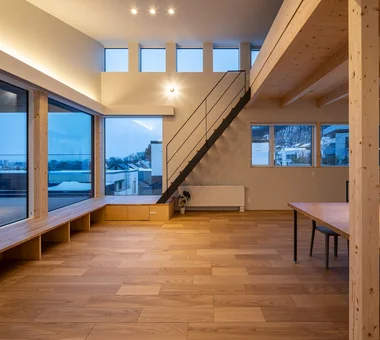
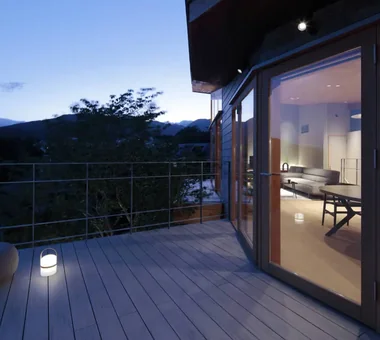
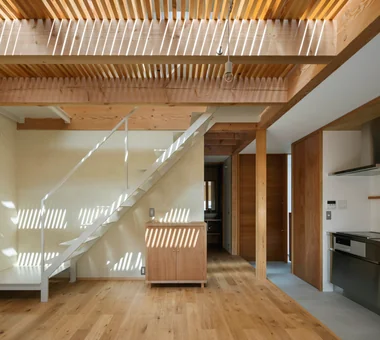
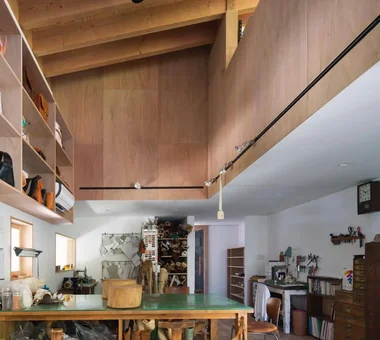
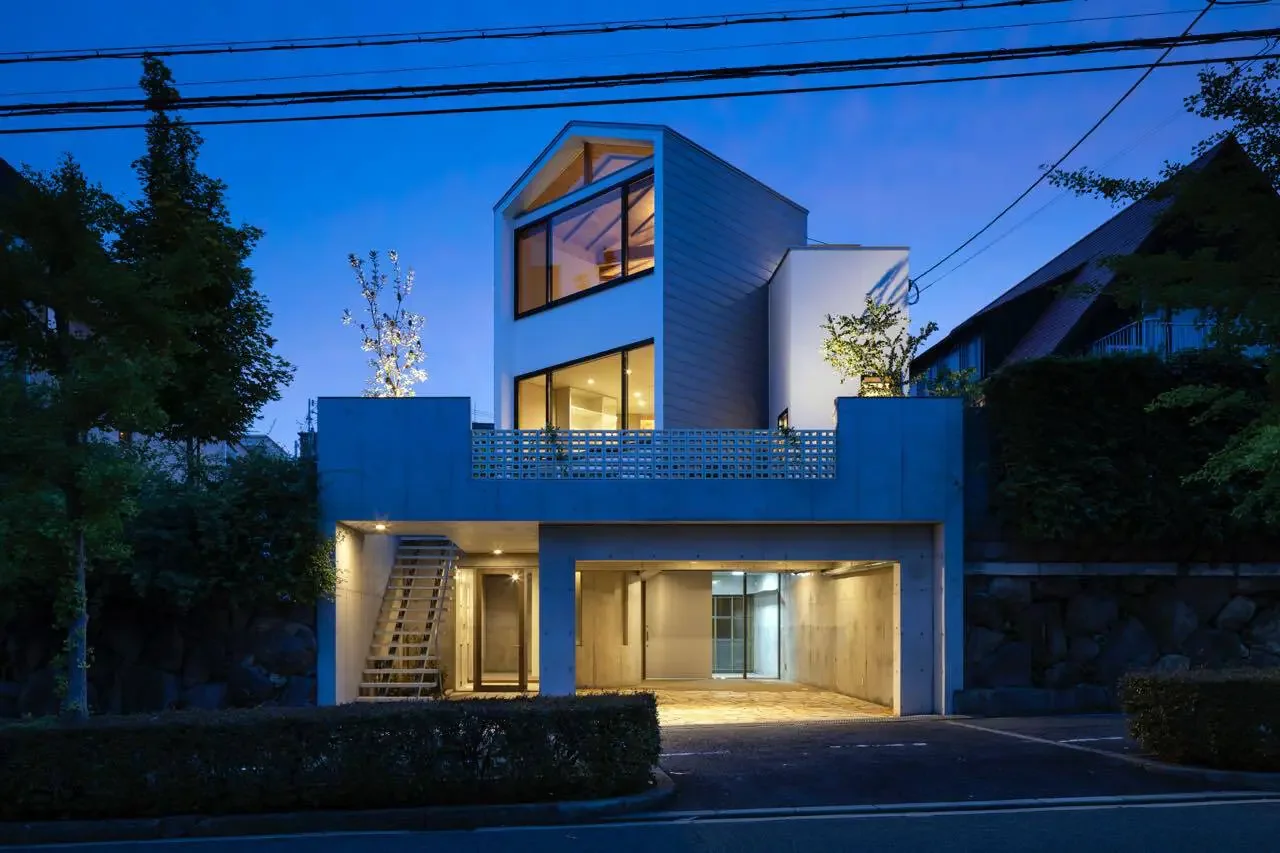
The site is located on the mid‑slope of Mount Ikoma. It is a flag lot with access from the east; to the west are views of Osaka Bay, the Akashi Kaikyō Bridge and the Rokko mountains, and to the north a cluster of cherry trees. The LDK is placed on the second floor to secure elevation and incorporate changing surroundings and vistas. A transparent entrance hall is located in the flagpole access strip, and intersecting stairs guide sightlines, connecting to the LDK through cuts in the ceiling and wall. A deep, L‑shaped, frame‑like balcony establishes continuity from interior to exterior. The ceiling is a modified gable form with exposed ascending rafters.
House in Himeshima
Abax Architects
This is a large-scale, three-story reinforced concrete residence with a total floor area exceeding 200 tsubo. Throughout the house, unconventional spatial experiences are interspersed—such as a staircase constructed of glass. In collaboration with a design-loving client, playful design gestures were layered to create a home with a generous sense of scale.
House in Koshigaya
Mochizuki Architectural Atelier
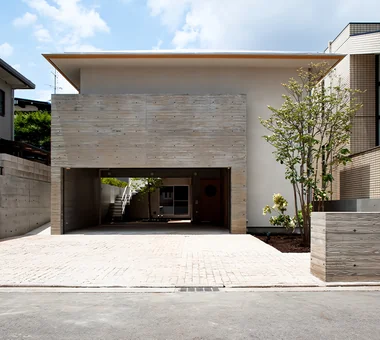
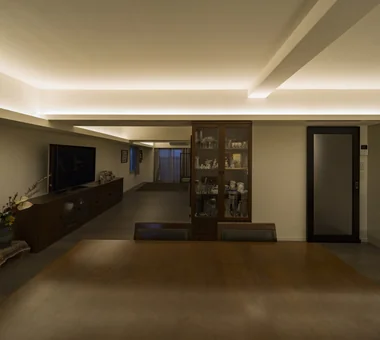
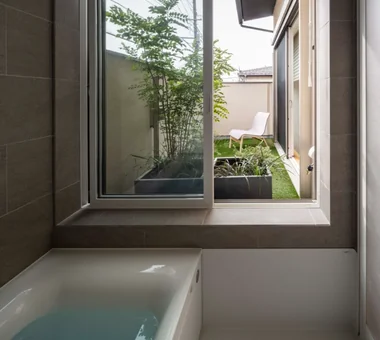
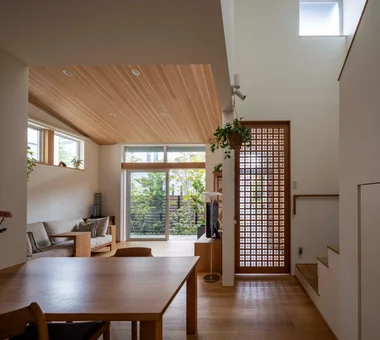
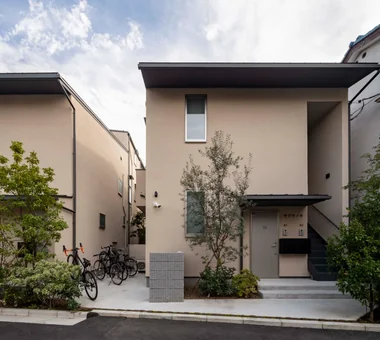
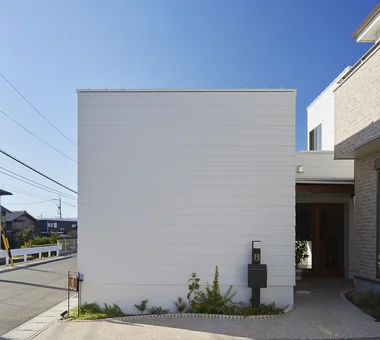
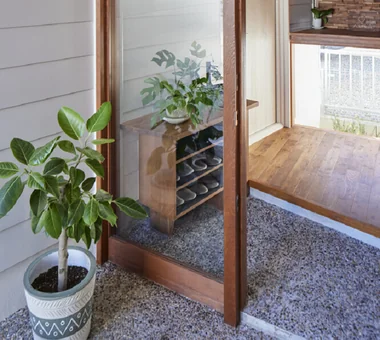
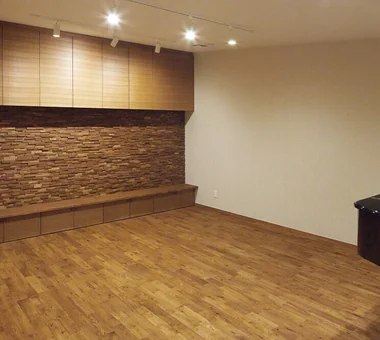
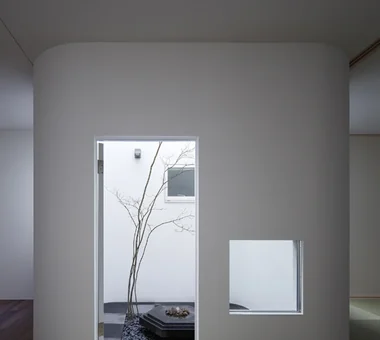
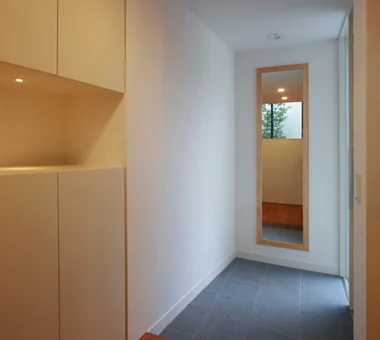
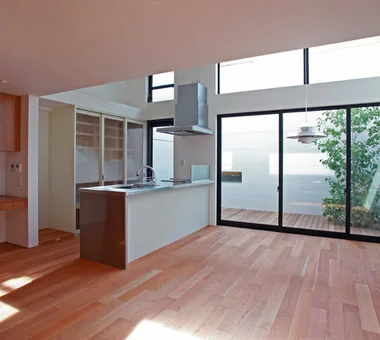
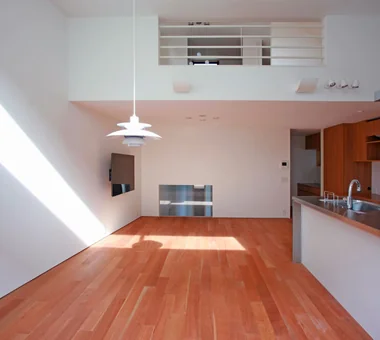
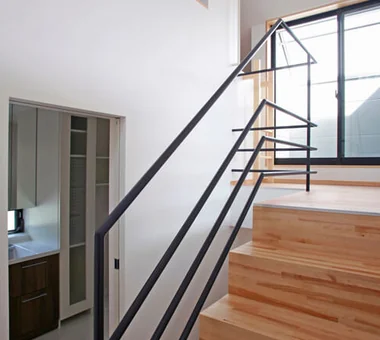
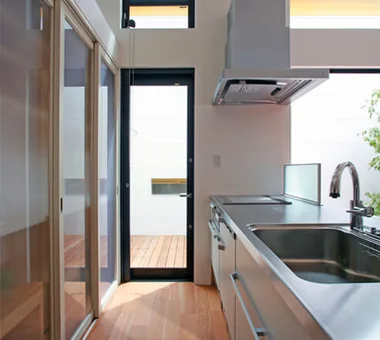
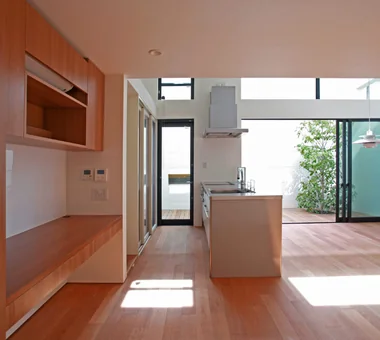
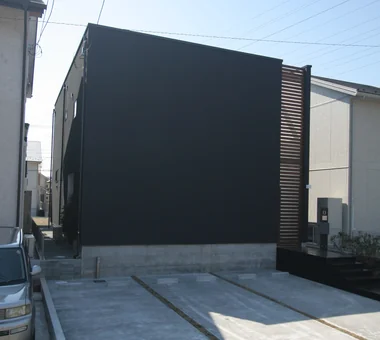
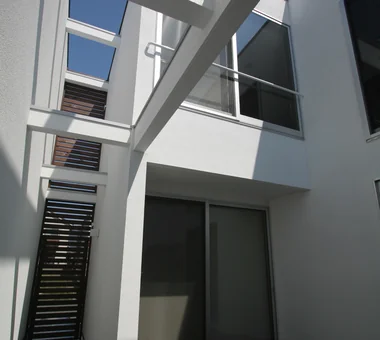
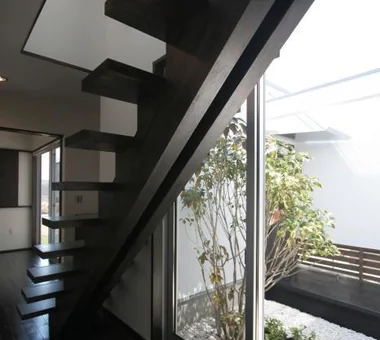
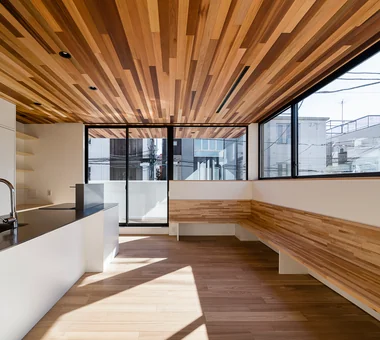
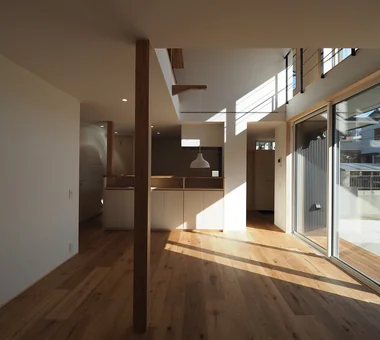
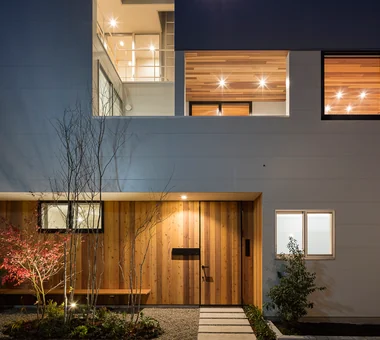
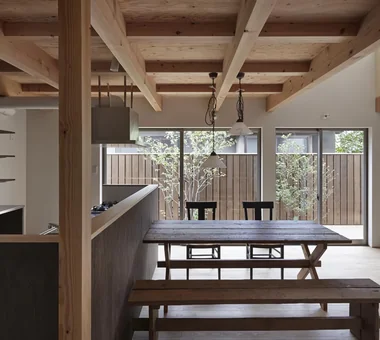
The site is a corner lot at the intersection of two streets close to the station; the design responds to both street-faced visibility and privacy considerations. Rather than incorporating the surrounding context, the plan creates an internal courtyard as a residual space within the lot to admit light, ventilation and greenery. Private rooms, storage and wet areas are located on the first floor, with the living, dining and kitchen arranged on the second floor; the ceiling leaves the structural rafters exposed beneath the roof. A Shimatone-riko (Japanese ash) is planted in the courtyard, and, together with the residents’ interiors and a home theater, the individual rooms are interconnected via the courtyard.
House in Kotani
Kurashi no Jōzōsho
Tsukuba Midorino House
Yu Architectural Design Studio
This residence with an integrated coffee stand is planned within a land readjustment development area. The fenestration employs uPVC window frames, and a Type 1 mechanical ventilation system utilizing the underfloor void has been adopted. The building’s thermal performance corresponds to Insulation Grade 5, meeting ZEH (Net Zero Energy House) standards. The residential façade is clad in Galvalume steel panels, while the shop façade uses charred cedar (shou sugi ban); the overall design is intended to harmonize with the surrounding streetscape.
Layering a Studio Apartment and a Traditional Kyoto Townhouse — Row House III on Showa Lane
Yoshihiro Yamamoto Architects Associates
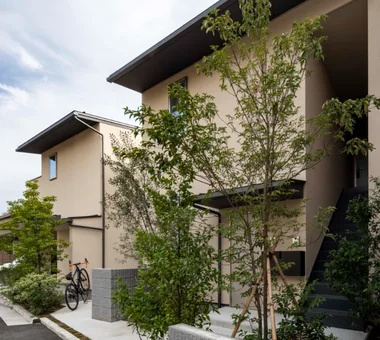
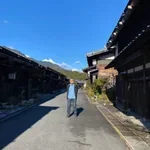
Phase 3 of the renovation of prewar row houses on Showa Lane, Higashiyama Ward, Kyoto. The exterior has been refined through the unification of rooflines and lime-based plaster finishes, while variations in lattices and windows preserve a measured degree of individual character. The residential units are conceived for live–work integration: wet areas are compactly consolidated and partitions removed to create studio layouts. Existing columns, beams and timber joinery have been retained and expressed, while aluminum window assemblies are introduced to improve overall building performance, reconciling the character of traditional townhouses with contemporary comfort.
House in Minamiashigara
Tenkosha First-Class Architects Office
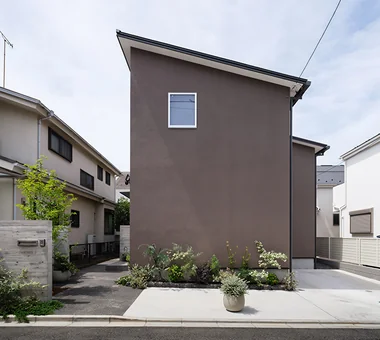
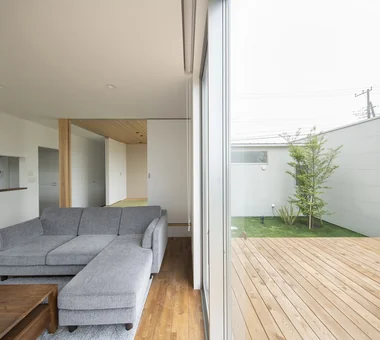
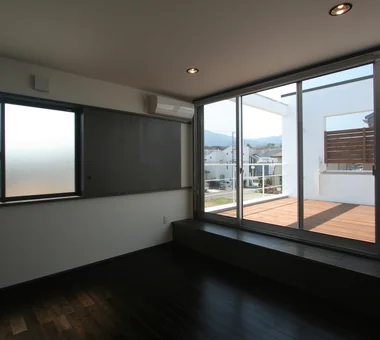
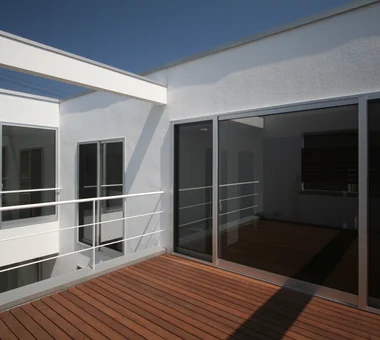
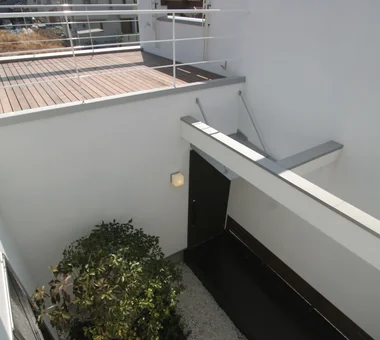
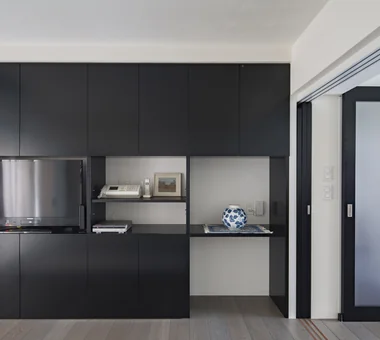
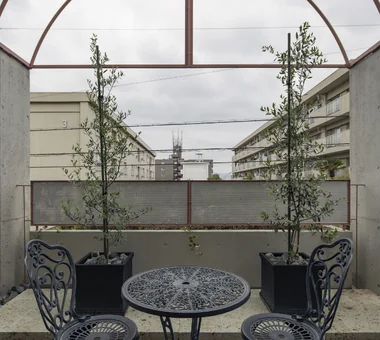
This is a residence for a young married couple and their two cats. In response to a newly reconfigured streetscape undergoing land readjustment, the composition is closed to the outside while opening inward. A U-shaped plan contains a courtyard with a "kakuremino" tree placed at its center, creating a gentle buffer from the street. A deck on the second floor provides separation from the surrounding environment while ensuring adequate daylighting. The interior is organized in a Japanese-modern style, prioritizing calmness and refinement rather than antiquarian qualities. It is a home whose character deepens with time.
-
Homes Featuring Wood-Burning Stoves|Introduction to Architecture Firms|The Richness of Life with Fire2026-05-11|Qurasuki Editorial Department -
Homes Featuring Soundproof Rooms|Key Points for Home Building|Balancing Sound Insulation Performance and Comfort in Design2026-03-02|Qurasuki Editorial Department -
Skip Floor|Pros and Cons|Three-Dimensional Living Spaces2026-01-27|Qurasuki Editorial Department -
Contemporary Design Residences|Case Studies|Pursuing Functional Beauty and Freedom in Spatial Composition2026-06-24|Qurasuki Editorial Department -
Garage Houses|Custom-built homes by architecture firms|A Home for Living with Your Beloved Car2026-05-11|Qurasuki Editorial Department -
Wooden Sash|Custom-built homes by architecture firms|Warm Materiality2026-05-13|Qurasuki Editorial Department