Archiplace
Homes Featuring Wood-Burning Stoves|Home Building Q&A
Author: Qurasuki Editorial Department
In wood-stove homes, integration into daily life encompasses fire-gathering times and firewood handling labor alongside heating roles. Engagement shifts depending on enjoying firewood storage/transportation as a routine and seasonal off-season utility. Heating demands vary by family schedules, residential scale, and regional climates. Accepting unique burdens of fire-based living, such as smoke, odors, and ash processing, is a crucial topic. We organize questions common in wood-stove homes through warmth, maintenance, seasons, and lifestyle relationships.
When installing a wood stove in your home, what should be checked first?
Because wood stoves reach high temperatures, it is necessary to check the Building Standards Act, Fire Service Act, and municipal ordinances regarding separation distances between the stove body and walls/floors, as well as surrounding non-combustible treatments. Furthermore, chimney placement and penetration points through roofs or walls alter structural integrity, waterproofing, and maintainability. Required conditions vary depending on the model of wood stove used, so it is important to plan while consulting designers or specialists with track records in wood stove installation once adoption is decided.
What points require attention when installing a chimney?
A chimney is essential equipment for properly discharging combustion smoke outdoors. Particularly at roof and wall penetration points, waterproofing, insulation, and separation from surrounding combustible materials must be properly planned. Because smoke discharge conditions and neighborhood impacts vary depending on chimney height, position, and relationships with surrounding buildings, design should account for the surrounding environment and wind flows. Additionally, planning access methods for maintenance beforehand—so that chimney sweeping and inspections can be performed regularly—provides peace of mind.
What specifications should be used for floors and walls surrounding a wood stove?
Around the wood stove, separation distances conforming to model specifications must be secured as countermeasures against sparks and radiant heat, and necessary areas finished with non-combustible materials. A common method is providing a hearth platform using bricks, tiles, stone, or mortar on the floor. For walls, check the range affected by heat from the stove and surrounding materials, applying non-combustible materials or heat-shielding measures as needed. Required separation distances and hearth specifications vary by model, so it is important to plan by checking the manufacturer's installation standards.
What floor plans are suited to distributing the heating effect of a wood stove throughout the house?
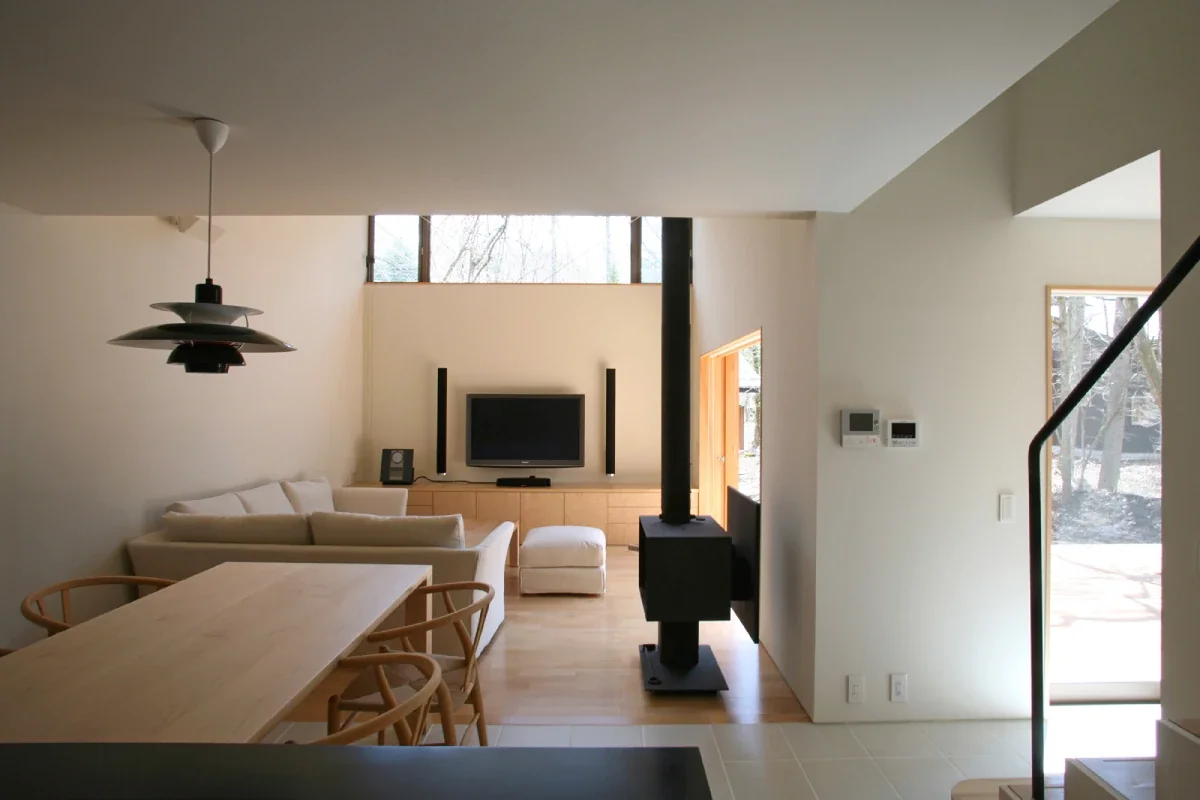
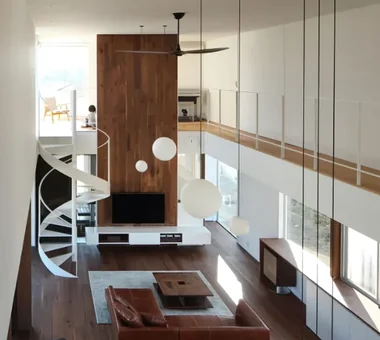
Floor plans where air between upper and lower floors connects gently—such as double-height spaces or living room stairs—are configurations that easily spread wood stove warm air through the house. However, because warm air tends to accumulate at upper levels, simply providing a double-height space does not mean the whole house warms evenly. Circulating air with ceiling fans or devising floor plan and opening positions is also effective. Simultaneously boosting insulation and airtightness prevents heated air from escaping, making it easier to leverage the heating effect of the wood stove.
How should firewood storage locations be planned?
Because firewood must be thoroughly dried, the basic approach is to prepare roofed firewood racks that are protected from rain and well-ventilated. Because firewood is heavy and needs to be carried daily, usability is enhanced by minimizing the circulation route from the outdoor firewood rack to the garage, entryway, and wood stove. When storing firewood indoors, measures such as bringing in only the required amount are necessary, considering the possibility of insects or dust entering. Securing sufficient storage space anticipating usage volume is also a key point.
How does wood stove installation relate to insulation performance?
While wood stoves generate massive heat output, low residential insulation performance causes hard-earned heat to escape outdoors. In homes with enhanced insulation and airtightness, heated air is easily retained indoors, utilizing wood stove heat efficiently. On the other hand, in high-airtightness homes, the balance with supply air and ventilation required for combustion is also important. Rather than considering the wood stove alone, it is vital to evaluate it alongside the insulation and airtightness planning of the entire house, including windows, exterior walls, and roofs.
When using a wood stove, how should countermeasures against carbon monoxide poisoning be considered?
To use a wood stove safely, it is crucial to properly secure air required for combustion and reliably discharge combustion gases outdoors via the chimney. Particularly in high-airtightness homes, if indoor air is strongly exhausted by ventilation equipment, it can affect wood stove combustion and exhaust, requiring evaluation including air supply planning. Because carbon monoxide is colorless and odorless and hard to notice, installing carbon monoxide detectors inside the home is one safety measure. Proper maintenance and management of the chimney and stove body are also indispensable.
How should ash disposal from a wood stove be planned?
Because ash accumulates after wood stove use, it is convenient to prepare a place in advance where ash can be safely removed and temporarily stored. Because ash can retain heat internally even when fires appear extinguished, it must be stored in suitable heat-resistant metal containers and cooled thoroughly. It is important to keep containers away from combustible materials to prevent fires. When utilizing ash in gardens, limiting quantities while considering impacts on plants and soil is recommended.
What points should be noted when combining a wood stove with a double-height ceiling?
While double-height spaces help deliver wood stove warm air to upper floors, warm air can concentrate upstairs, causing temperature differences between upper and lower levels. Circulating air using ceiling fans helps suppress indoor temperature differences. Moreover, because chimneys passing through double-height spaces often become central architectural features, planning should encompass chimney length, position, surrounding materials, and maintainability. When installing large windows, attention must be paid to heat loss through windows, maintaining a balance with the overall insulation performance of the house.
What costs should be anticipated when introducing a wood stove?
Costs for wood stoves encompass not only the unit price but also chimneys, hearth platforms, wall non-combustible treatments, and installation work. Because total costs vary depending on chimney length and routing, roof/wall shapes, and interior finishes, evaluations should not rely solely on unit prices. Furthermore, post-installation running costs include firewood purchase/procurement expenses alongside chimney cleaning and stove maintenance expenses. Planning long-term budgets inclusive of both initial investment and running costs provides peace of mind.
How frequently is wood stove maintenance required?
Regular inspections and cleaning of chimneys and stove bodies are crucial for wood stoves. In particular, soot and tar accumulating inside chimneys can lead to poor exhaust or chimney fires. Cleaning frequency varies by usage volume, firewood dryness, and stove model, but conducting regular inspections at least once a year and hiring specialists for cleaning as needed provides peace of mind. Glass doors, ash drawers, and gaskets should also be checked routinely for any abnormalities in combustion states.
How should the interior design of a home with a wood stove be put together?
Because wood stoves are prominent fixtures, treating them as part of the interior—including hearth platforms and chimneys—allows them to blend naturally into the space. Hearth platforms can use bricks, tiles, stone, or mortar, combining them with floor and wall materials. They pair well with natural material interiors such as solid wood or plastered walls, and can be enjoyed alongside the aging process of materials. Planning firewood storage locations as part of architectural design while prioritizing usability creates scenery unique to living with a wood stove.
Can wood stoves be used concurrently with other heating equipment such as floor heating?
Concurrent use of multiple heating systems, such as wood stoves and floor heating, is possible. You can use wood stove heat during hours it can be operated, and switch to other heating equipment when going out or sleeping, adapting to your lifestyle. Because wood stoves feature distinct startup and heat transmission properties, combining them while respecting the characteristics of floor heating or air conditioners is important. Considering heating plans inclusive of residential insulation/airtightness and family living hours results in a more comfortable home.
Can wood stoves be installed in condominiums?
In multi-family housing such as condominiums, installing wood stoves faces major constraints compared to detached houses because installing chimneys outdoors and making openings in exterior walls or roofs is difficult. Furthermore, management bylaws, usage regulations, building structures, and fire prevention conditions must be checked. If chimney installation is not permitted, introducing a wood stove itself is often difficult. If you wish to enjoy the ambiance of a wood stove in multi-family housing, you will need to consider alternative options such as heating appliances that do not require chimneys.
What should be communicated early in the design stage when building a home with a wood stove?
It is important to communicate concretely how often you want to use the wood stove, whether you want to heat the whole house, or if you want to enjoy it centered around the living room. Additionally, thinking through firewood storage, carrying routes, ash disposal, and maintenance methods drastically changes daily usability. Furthermore, chimney position, structure, fire prevention, ventilation, and insulation/airtightness performance are elements difficult to change later. Planning the wood stove not as a standalone appliance but integrated with the overall home design leads to long-lasting, worry-free living with a wood stove.


 House with a Natural Woodland Garden|Key Points for Home Building
 A Home for Living with Antiques|Introduction to Examples by Floor Plan & Room Type
 House of Wood|Home Building Q&A
 Stylish Atriums|Key Points for Home Building
 Stylish Staircases|Home Building Q&A
 House with a Wood Deck|Home Building Q&A