Takeshi Hirobe Architects
House with Full Wall Bookshelves|Home Building Q&A
Author: Qurasuki Editorial Department
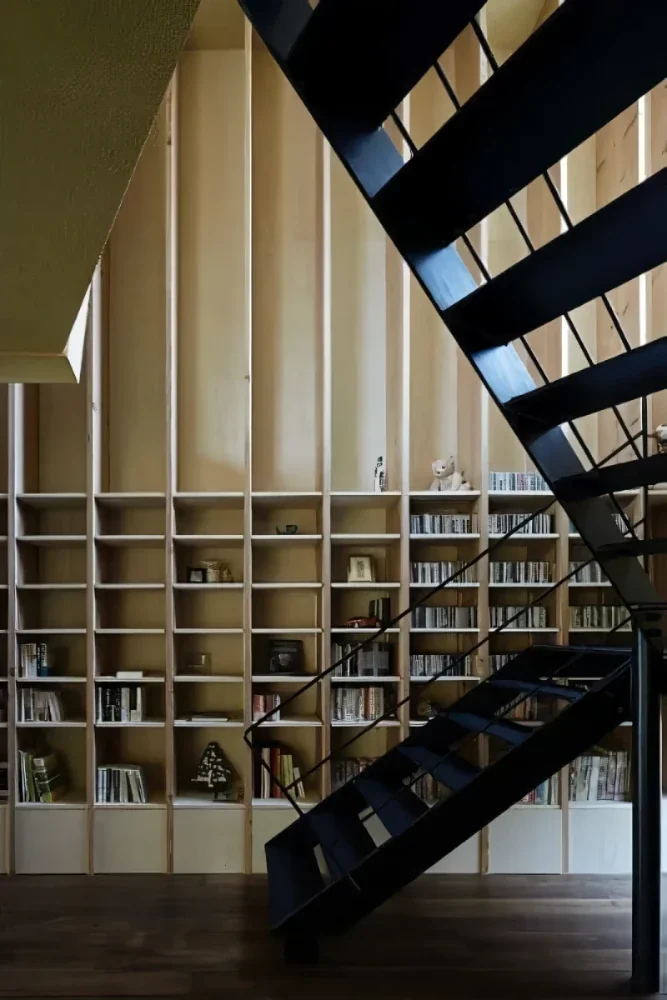
In a home with a wall bookshelf, the impression of the space is shaped not only by storing books, but also by how books are positioned within daily life. While some households prefer concealing books for a clean look, others enjoy showcasing their book collection as part of the interior design. Required storage capacity varies with the quantity and size of books owned and potential future growth, while placement depends on whether books are shared by the family or kept in a personal reading nook. Moreover, covering an entire wall with bookshelves impacts room impressions and furniture layout. The need for future storage also differs depending on whether the focus is on physical books or combined with e-books. For homes with a wall bookshelf, we organize questions such as book volume, reading style, family structure, and how differences emerge based on spatial usage.
When wanting to install a bookshelf across an entire wall, what points should be checked first?
Begin by grasping current book collection volumes and future growth projections to think about necessary shelf lengths and heights. When installing custom built-in bookshelves across a wall, considering loads on floors and walls—including both books and the weight of the shelving itself—is important. Especially when storing large book collections, determining placement while checking structural conditions and wall backing, including relationships with columns and load-bearing walls, offers peace of mind.
How much seismic consideration is required for wall bookshelves?
Because bookshelves storing large quantities of books become heavy, accounting for tipping during earthquakes and book drops is necessary. For custom bookshelves too, securing them securely via methods corresponding to structures such as wall backing or columns is critical. Especially for bookshelves reaching close to ceilings or placed in room centers, considering shelf shapes and presence of doors that prevent falling items, alongside tipping prevention, is recommended.
I am worried whether floors can support bookshelf weight. How should I check this?
With large book collections, combined weights of bookshelves and books become heavy, making it important to verify loads applied to floors at the design stage. Especially when storing books concentrated near walls, required responses vary based on structures, beams, and joist arrangements. Whether new construction or renovation, communicating assumed book collection volumes and bookshelf sizes to designers, and having them examine reinforcement needs matching building structures, provides peace of mind.
How should window placement relate to preventing books from sun fading?
Books can experience paper and binding discoloration from UV rays and light. Therefore, a basic countermeasure is avoiding placing bookshelves in locations exposed to direct sunlight for extended periods. When placing bookshelves near windows, combining sheer curtains, blinds, or UV-cut glass is an option. Deciding window and bookshelf locations by considering light penetration patterns by time of day helps protect collections while securing daylighting.
How should moisture management be approached in rooms with bookshelves?
Paper is easily affected by moisture, and sustained high humidity states can lead to mold and paper deterioration. Rooms featuring bookshelves should enable proper ventilation and utilize air conditioning, dehumidification, or humidification equipment as needed to tune indoor environments. For bookshelves facing exterior walls, paying attention to surface condensation on walls and securing insulation performance is important. To enjoy book collections long-term, plan moisture-resistant storage.
Can bookshelves be utilized as room dividers?
Placing tall bookshelves in room centers allows spaces to be divided gently without constructing new walls. Utilizing double-sided bookshelves enabling book retrieval from both sides allows open configurations passing lines of sight and light while serving dual storage and partition functions. However, because large bookshelves are heavy, floor loads and tipping prevention must be thoroughly examined. Planning fixing methods at the design stage, including earthquake safety, provides peace of mind.
What devices exist for retrieving books in high positions?
When installing bookshelves up to ceilings, combining sliding ladders or step stools makes high-level storage usable. Arranging placements based on usage—such as frequently read books at reachable heights and lower-frequency books higher up—is also effective. When installing ladders, ensure storage space and vertical circulation routes while prioritizing safety against tipping or missteps.
How should lighting be planned in rooms with bookshelves?
To facilitate spine searching, planning uniform lighting ensuring light reaches shelf depths is a key point. Embedding lighting beneath shelf boards or atop bookshelves illuminates spines while creating calm interior atmospheres. Providing separate lighting appropriately illuminating hand areas in reading spaces ensures comfort. When selecting light fixtures, reviewing light color, brightness, and color rendering to match lifestyle styles is recommended.
How should pest prevention be approached in homes with bookshelves?
Establishing book preservation environments fundamentally relies on avoiding trapped moisture and maintaining cleanliness. Because pests generate in dust and humid environments alongside paper, regularly cleaning bookshelf surroundings and properly maintaining indoor humidity is important. For bookshelves adhering to walls, pay attention to wall condensation and moisture. Providing appropriate clearance behind bookshelves as needed, configured for easy inspection and cleaning, offers peace of mind.
What impact do wall bookshelves have on insulation performance?
When installing bookshelves on exterior-facing walls, care is required so bookshelf detailing does not impact insulation or airtight layer construction. Rather than treating bookshelves themselves as insulation substitutes, planning storage after securing wall insulation and airtight performance is fundamental. Additionally, exterior-facing bookshelves require attention to condensation caused by lower indoor-side surface temperatures. Integrating insulation/airtight detailing and bookshelf joinery is recommended for both new builds and renovations.
Are there devices for enjoying quiet reading in rooms with bookshelves?
For focused reading enjoyment, setting reading spaces slightly away from family gathering living rooms or outside daily circulation routes is an option. Refining wall and fixture specifications can suppress sounds transmitted from adjacent rooms. While bookshelves themselves offer some sound diffusion and absorption effects, comprehensive planning encompassing walls, floors, ceilings, and fixtures is necessary for dedicated sound insulation. Creating visually calming environments—such as bringing in exterior green foliage and natural light—enriches reading times.
Assuming book collections grow in the future, how should bookshelf planning be approached?
Rather than filling bookshelves with current collection volumes, leaving margins anticipating future growth is important. Making shelf boards adjustable allows flexible responses to changing book sizes and storage methods. Alternatively, rather than blanketing all walls with bookshelves, leaving portions as future expansion spaces works too. Determining storage capacities while considering future lifestyle shifts, such as electronic book transitions and collection curation, leads to balanced plans.
Are there ways to utilize stair surrounds in homes with bookshelves?
Stair surrounds utilize vertically continuous wall surfaces, making them compatible spaces for bookshelves. Installing bookshelves within under-stair or landing corners effectively utilizes limited spaces while naturally incorporating books into daily life. However, because stairs have Building Standards Act regulations regarding dimensions and handrails for safe ascension, ensure bookshelves do not obstruct stair or escape paths. Prioritize ease of retrieval and safety when storing high-position books.
Can wall bookshelves be installed later during renovations?
Creating new wall bookshelves is possible in existing homes. However, confirming existing wall structures and backing locations before examining fixing methods is necessary. When storing large collections, verify floor and wall loads considering combined weights of bookshelves and books. Planning matched to building conditions while minding interferences with existing wiring or equipment plumbing is important.
What should be communicated early in design when building homes with wall bookshelves?
Beyond current collection volumes, conveying specifics like future growth potential, book sizes, storage methods, and ratios of frequently read versus preserved books makes evaluating required bookshelf scales easier. Share early preferences regarding usage as wall storage, room dividers, or integrated reading spaces. Designing environments for living with books—encompassing light, moisture, loads, and safety—creates homes where collections become part of the living scenery.






 The Simple House|Introduction to Architecture Firms
 A Home to Live with Design|Key Points for Home Building
 House with a Private Dog Run|Custom Home Examples by Architectural Offices
 A Home for Living with Antiques|Introduction to Architecture Firms
 Stylish Gardens|Key Points for Home Building
 House of Wood|Key Points for Home Building